

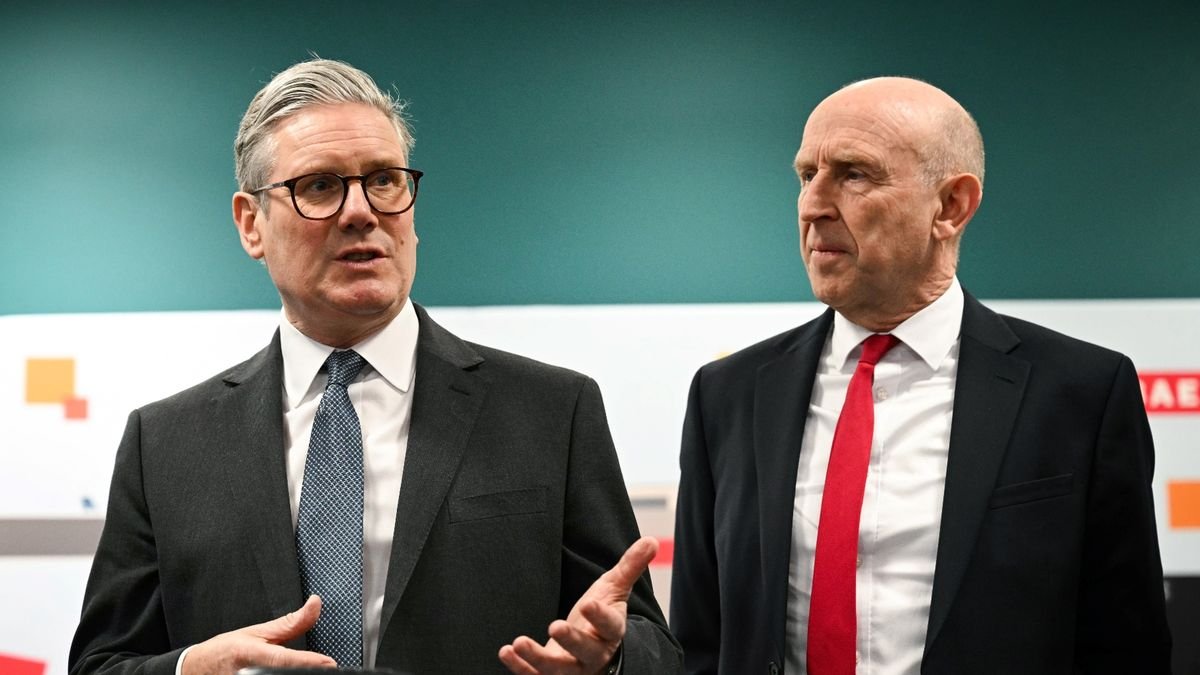
Keir Starmer’s administration has faced a significant upheaval as two respected defence ministers have tendered their resignations, delivering scathing critiques of military expenditure plans. The Prime Minister suffered a major setback on Thursday following the unexpected resignation of Defence Secretary John Healey, sparking a crisis within the Ministry of Defence. Shortly thereafter, Al Carns, a former Royal Marine, stepped down from his role as Armed Forces Minister, denouncing the “inadequate” defense funding. Additionally, ministerial aides Pamela Nash and Rachel Hopkins also chose to resign. The government has been embroiled in a contentious debate over financing the long-overdue Defense Investment Plan (DIP), which is already more than six months behind schedule. In his strongly worded resignation letter, Mr. Healey accused the Prime Minister of failing to stand up to the Treasury’s reluctance to allocate the necessary funds for national defense.
Business Secretary Peter Kyle emphasized on Friday that the DIP is still in development and not in disarray. He stressed the importance of getting the plan right, highlighting the substantial investment in defense amidst the need to modernize defense strategies while supporting British employment opportunities. Starmer has committed to unveiling the plan by the NATO summit on July 7.
Al Carns, who resigned as Armed Forces Minister, suggested cutting the welfare budget to bolster defense spending. He underscored the need to find additional funding, expressing a belief in providing assistance to those most in need while maintaining a balance in defense expenditure. Carns did not rule out a potential bid for the Labour leadership and premiership.
The ongoing debate surrounding defense spending raises questions on funding sources for increased military allocations. The government remains steadfast in its insistence on responsible funding mechanisms to avoid jeopardizing public finances. The discussion includes potential tax hikes, spending cuts, or increased borrowing to support the long-delayed DIP, with challenges in identifying suitable funding streams for the significant uplift in defense spending by 2035.
In response to the recent resignations and criticisms, Keir Starmer has reaffirmed his commitment to a substantial boost in defense spending. He refuted Healey’s claims regarding the government’s dedication to defense funding, emphasizing that the Defense Investment Plan will provide essential resources for national security through sustainable and equitable spending increases. Starmer emphasized the necessity of maintaining strong public finances to ensure national security.
Chancellor Rachel Reeves acknowledged the economic impact of conflicts in the Middle East, highlighting the government’s economic plan to address the challenges. Meanwhile, the UK economy faced a minor contraction in April, as reported by the Office for National Statistics.
Business Secretary Peter Kyle expressed support for Keir Starmer’s purposeful approach to enhancing defense spending, emphasizing responsible funding practices and the government’s commitment to driving economic growth. The government aims to increase defense spending as a percentage of GDP in the coming years while ensuring benefits for British jobs and businesses.
Dan Jarvis has been appointed as the new Defense Secretary following John Healey’s resignation, aiming to address the challenges in defense spending and maintain the nation’s security. The recent resignations and criticisms underscore the complexity and importance of funding defense initiatives effectively while balancing economic stability and national security.

