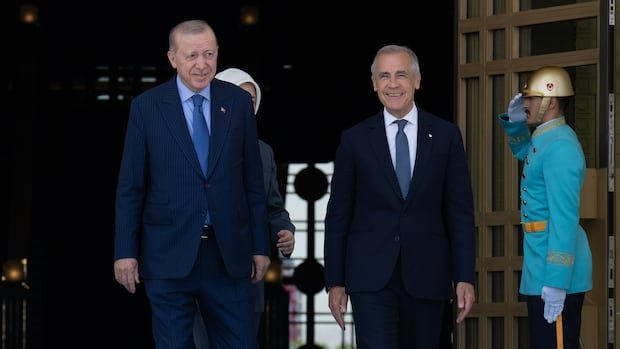
Prime Minister Mark Carney is set to embark on a three-day trip to Turkey, a key NATO ally with a growing economic and defense sector that has caught the attention of Ottawa. This visit will mark the first dedicated bilateral visit to Turkey by a Canadian prime minister and will include meetings with President Recep Tayyip Erdoğan in Ankara and business leaders in Istanbul.
The meetings signify a positive turn in relations between the two countries following Canada’s imposition of a de facto arms embargo on Turkey. This embargo stemmed from allegations that Ankara had redirected Canadian-manufactured drone parts to Azerbaijani forces during the conflict with Armenia over the disputed Nagorno-Karabakh region. However, this policy has since been relaxed.
The visit comes on the heels of a recent crackdown in Turkey on dissent and civil society, particularly targeting LGBTQ+ and HIV-advocacy organizations. Senior federal officials, speaking on background before the trip, emphasized that the visit aligns with Canada’s foreign policy, focusing on values-based realism and a balance between principles and pragmatism.
During the visit, key topics of discussion are expected to revolve around negotiating a free trade agreement, expanding cooperation in energy and strategic industries, and strengthening defense-industrial ties between Canada and Turkey. With a current trade volume of approximately $4.3 billion, both countries formally announced the commencement of free trade negotiations during the NATO summit in Ankara earlier.
Canada is looking to enhance its strategic partnership with Turkey as part of its broader efforts to diversify international economic relationships and lessen reliance on the United States. Prime Minister Carney will be joined by Foreign Minister Anita Anand and Energy Minister Tim Hodgeson on this mission.
One significant focus of the discussions will be on Canada’s interest in promoting its Candu nuclear reactor technology in Turkey, which is aiming to expand its nuclear-energy sector to reduce dependence on imported fossil fuels. The potential collaboration on nuclear projects underscores the long-term commitments and complexities involved in such ventures.
Moreover, there is anticipation for progress in enhancing defense-industrial cooperation between the two nations. Canadian Secretary of State for Defence Procurement, Stephen Fuhr, has highlighted ammunition production, drones, and counter-drone systems as potential areas for cooperation with Turkey, emphasizing the benefits of co-development programs over off-the-shelf purchases.
Despite past tensions over military exports, senior federal officials confirmed Canada’s continued application of export-control measures to ensure adherence to international humanitarian laws. The resumption of more regular contact with Turkey is seen as an opportunity to strengthen the partnership and foster constructive dialogues on defense and trade matters.
The visit aims to bolster ties between Canada and Turkey, explore new avenues for cooperation, and set the stage for a more robust and mutually beneficial relationship moving forward.