
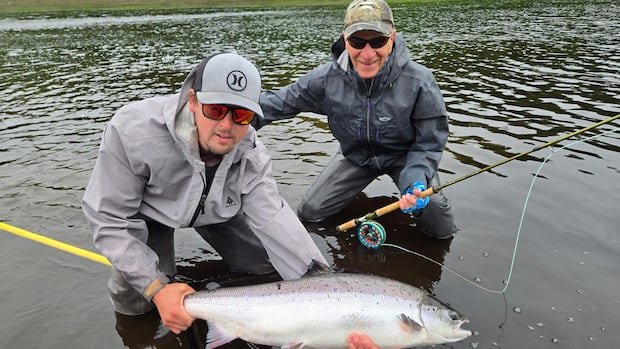
Every experienced angler, guide, and outfitter in the Miramichi watershed can recall their initial encounter with a striped bass. Rip Cunningham, a member of the prestigious Black Brook Salmon Club, vividly remembers his first striped bass catch at the confluence of the Main Southwest Miramichi River and the Cains River. Initially mistaking it for a salmon, he was puzzled by its behavior as it was not jumping. Subsequently, local guides were equally baffled by the unusual sight. This marked the beginning of what Cunningham now perceives as a serious threat to the Miramichi’s wild Atlantic salmon population.
Byron Coughlan, who operates the County Haven fishing lodge near Blackville, recounts an incident from 15 years ago when two salmon anglers from New England caught two bass. They expressed concerns about the bass population overpowering the salmon and potentially leading to the decline of the latter species.
The angling community in the Miramichi watershed is alarmed at the possibility of this prediction materializing. They fear that the growing striped bass population is preying on juvenile salmon during their migration to the ocean, jeopardizing the survival of the iconic Atlantic salmon.
Anglers attribute the surge in the bass population to the federal Department of Fisheries and Oceans’ (DFO) decision to close the commercial striped bass fishery in 1996 due to overfishing. This closure inadvertently allowed the bass population to escalate to unsustainable levels, disrupting the ecosystem’s delicate equilibrium.
Concerned anglers, including Bradford Burns, Rip Cunningham, and Alex Mills, have initiated legal action against the DFO to demand the reinstatement of a commercial bass fishery. They argue that the excessive predation by bass poses a severe threat to the Atlantic salmon, a species synonymous with the Miramichi’s heritage.
The ongoing debate revolves around finding viable solutions to address the imbalance caused by the burgeoning bass population. While some advocate for a controlled commercial bass fishery to manage the bass numbers, others stress the need for comprehensive scientific research to understand the broader ecological dynamics at play.
Efforts by conservation groups, such as the Atlantic Salmon Federation and Anqotum Resource Management, involve tagging and relocating salmon smolts to safeguard them from bass predation. However, the effectiveness of these measures remains a subject of debate within the angling community.
As stakeholders continue to grapple with the complex interplay between the striped bass and the Atlantic salmon, the fate of these two species hangs in the balance. The evolving narrative in the Miramichi watershed underscores the challenges of preserving a delicate ecological equilibrium amidst changing environmental dynamics and human interventions.

