
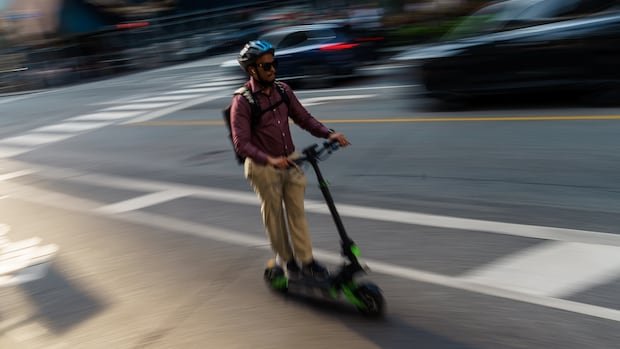
The Montreal borough of Saint-Laurent has implemented a new bylaw prohibiting electric scooters and other motorized personal mobility devices in public areas under its authority, such as city parks, trails, and sidewalks. Vana Nazarian, a city councillor representing the borough, mentioned that the decision was made in response to a series of incidents and close calls during the summer, coinciding with the increasing popularity of these devices.
According to Nazarian, the intention is not to ban these devices outright but rather to ensure that they are used in areas where vulnerable populations are not put at risk due to the high speeds of the scooters. The borough, known for its large population of young families and seniors, aims to create safe environments in parks and trails where collisions are less likely to occur.
The hope is that the new bylaw will encourage users of e-scooters, e-unicycles, and similar motorized devices to operate them more responsibly. This decision comes shortly after Quebec extended its e-scooter pilot project, despite concerns from medical professionals about the safety of children under the existing regulations.
The original pilot, launched in 2023, allowed individuals aged 14 and above to use electric scooters on roads with speed limits below 50 km/h and on bike paths, with mandatory helmet usage. The updated regulations, effective from July 18, include a speed limit of 25 km/h for e-scooters, with violators facing a $200 fine from law enforcement.
Deborah Friedman, the trauma director at the Montreal Children’s Hospital, reported a significant increase in e-scooter-related injuries since the pilot project began. The number of such injuries has surged, with 80 cases in 2025 and 112 cases so far this year, including severe injuries requiring hospitalization.
Friedman emphasized the need for stronger regulations and improved enforcement at all levels of government. She advocated for raising the minimum age for e-scooter use to 16 and introducing a Class 6D license requirement, similar to that for operating mopeds. Friedman highlighted the lack of judgment and control among younger riders, citing the importance of proper helmets to prevent facial injuries.
She also stressed the responsibility of e-scooter manufacturers in product labeling and marketing, noting that some devices are erroneously perceived as toys. Friedman called for public awareness and policy changes based on empirical data to address the rising number of e-scooter-related incidents, emphasizing the impact on individuals, families, and communities.

