
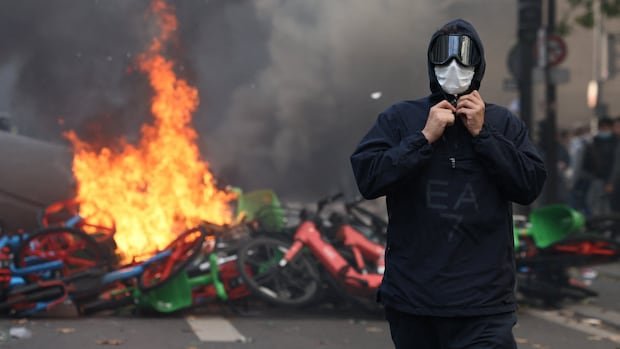
France is bracing for a tense aftermath following a day of significant and unusually violent protests that united high schoolers, trade unions, and “yellow vest” demonstrators in Paris, Lille, and other cities. Despite some peaceful aspects, clashes between protesters and police resulted in chaos, arrests, looting, and vandalism, leaving parts of Paris resembling a war zone. Authorities reported 400 arrests and estimated 110,000 demonstrators in Paris alone. The impact of the violence is expected to linger, creating a lasting impression on the city.
The protests reflect deeper ideological divisions on values, spending priorities, and the role of the French state in protecting its economy versus its most vulnerable citizens. What began as high schoolers demanding improved school conditions has evolved into a broader struggle over the fundamental principles of the French Republic. The involvement of the yellow vest movement adds complexity to the situation, potentially extending the protests’ longevity and impact.
Political leaders have condemned the violence and emphasized the need to differentiate between peaceful protesters and instigators of chaos. Amid ongoing tensions, concerns over fiscal challenges, class disparities, systemic racism, and the government’s response tactics have fueled the unrest. Students express grievances over deteriorating education conditions and demand reforms to address overcrowded classrooms, inadequate facilities, and funding priorities.
The protests highlight a clash of priorities and a growing discontent with economic policies. The aggressive law enforcement response has led to numerous student arrests and injuries, sparking further outrage. As the situation unfolds, France faces a critical juncture ahead of the upcoming presidential election, with political uncertainty and societal divisions deepening. The rise of far-right voices and calls for order restoration add complexity to the evolving crisis, raising concerns among protesters about their future safety and the direction of the country.

