
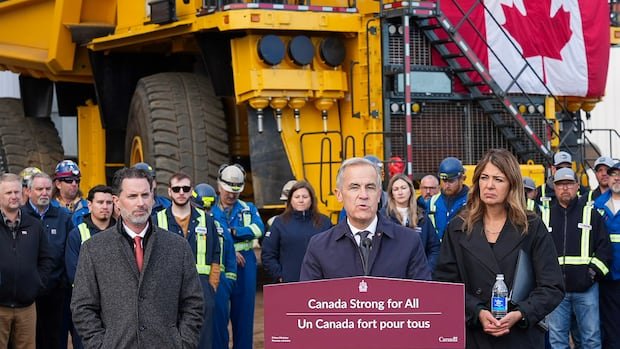
Leaders of Métis communities in Alberta’s Wood Buffalo area are criticizing the federal government for not involving them in talks regarding the proposed Pacific Link pipeline project.
Prime Minister Mark Carney held discussions with several First Nations leaders before declaring the West Coast oil pipeline in the national interest under the Building Canada Act. However, the leaders of six Métis communities claim they were not consulted prior to the announcement.
During a press conference in Fort McMurray, Alberta, Métis leaders expressed disappointment at not being included in the joint federal-provincial announcement on Oct. 1 and not being informed about ownership stakes in the project.
Kelly Myers, district captain for Fort McMurray Métis, emphasized the importance of speaking out, stating, “Silence implies acceptance, and that’s why we’re speaking up.”
CBC News reached out to the federal government’s Privy Council Office for comment but had not received a response by the time of reporting.
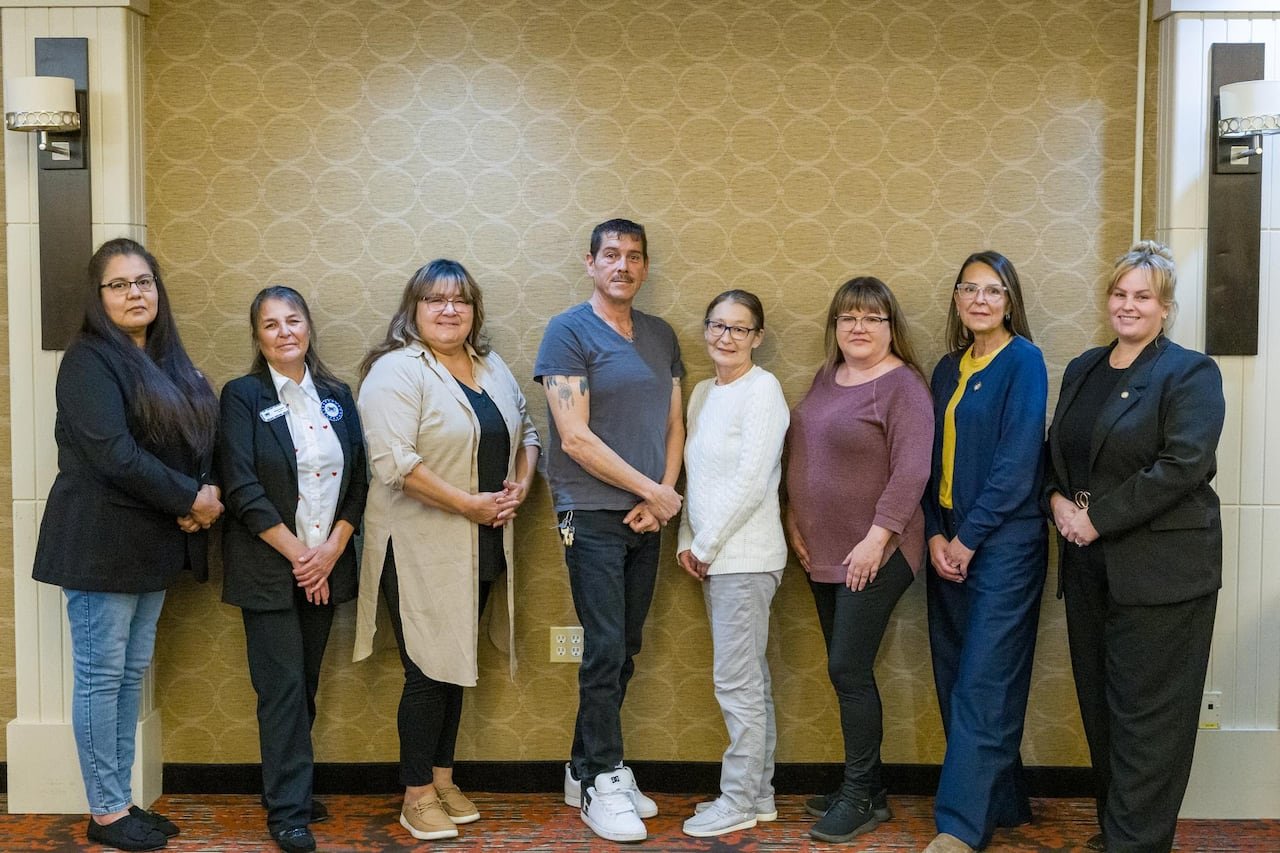
Leaders from six Métis communities in the Fort McMurray Wood Buffalo region pose for a photo at the Quality Inn Hotel in Fort McMurray on Oct. 13, 2026. From left: Councillors Lana Huppie and Brenda Paquette of Fort McKay Métis Nation; Loretta Waquan, president of Fort McKay Métis Nation; Paul Tremblay, vice-president of Conklin Métis Local 193; Ruby Ladouceur, president of Fort Chipewyan Métis Nation; Stella Lavallee, president of Willow Lake Métis Nation; Kelly Myers, district captain for Fort McMurray Métis; Jennifer Vardy, strategist with Chard Métis Nation. (Image supplied by McMurray Métis)
If approved, the Pacific Link pipeline will transport one million barrels of oil per day from Alberta’s oilsands to tankers near Delta, B.C. The federal and Alberta governments aim to secure construction approvals by September 2027, with the pipeline operational by 2032 or 2033.
Carney has pledged a 10% ownership opportunity for Indigenous communities, along with Indigenous contracting and employment prospects.
“We are involving Indigenous peoples from the project’s inception,” Carney affirmed during the Oct. 1 announcement, highlighting the economic benefits for Indigenous groups.
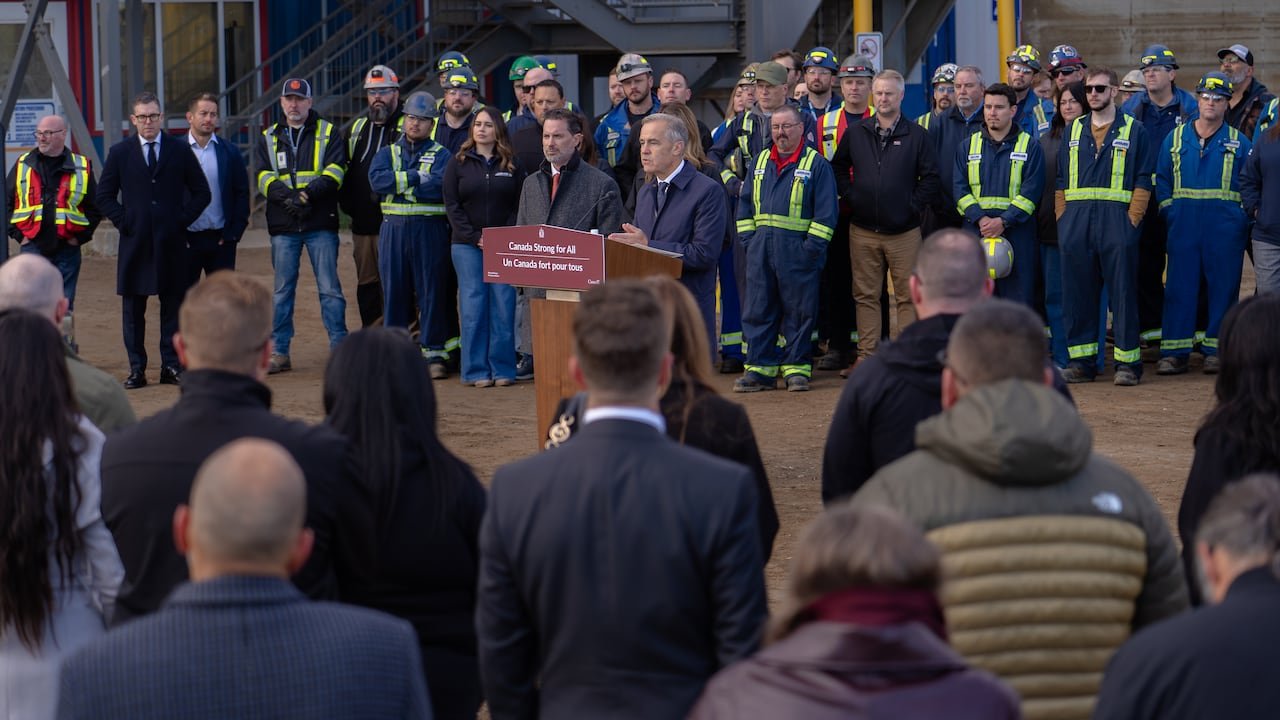
Prime Minister Mark Carney announces the Pacific Link pipeline project during a visit to Fort McMurray, Alta., on Oct. 1, 2026. (Emilio Avalos/CBC/Radio-Canada)
Representing Métis communities in Fort McMurray, Fort Chipewyan, Fort McKay, Willow Lake, Conklin, and Chard, the Métis leaders revealed they haven’t been consulted on the project. While they did not oppose the pipeline at the news conference, they expressed reservations and queries that they want addressed before any federal approvals are granted.
Ruby Ladouceur, president of Fort Chipewyan Métis Nation, voiced concerns

