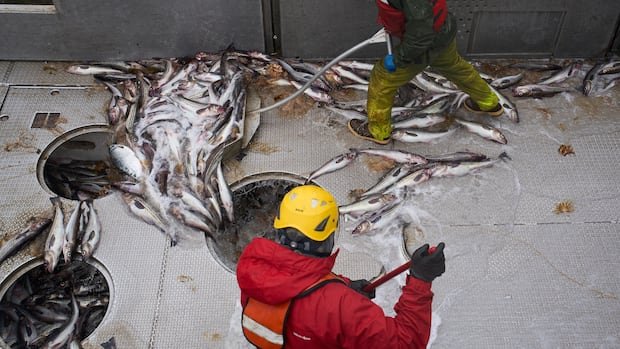
In the vast Bering Sea, the fishing net emerged bursting with Alaska pollock, tightly packed to the point where other marine creatures like crabs, skate, jellyfish, and notably, salmon, spilled onto the deck. Maverick Blake, the captain of the vessel, acknowledged the challenges of unintentionally catching non-target species but emphasized the necessity of such fishing practices to provide seafood for consumption.
Alaska pollock, a significant fishery worldwide, is a key ingredient in various food products such as McDonald’s Filet-O-Fish sandwiches and imitation crab. Despite efforts to minimize environmental impact, the fishing nets used in pollock fishing inadvertently capture other marine life, including salmon. Bycatch, marine life caught unintentionally during targeted fishing, accounts for two percent of the total pollock catch, potentially leading to hundreds of thousands of salmon being caught annually.
The contentious issue of salmon bycatch has intensified as salmon populations decline in western Alaska, impacting Indigenous communities reliant on salmon for sustenance. Trawling and bycatch have become focal points in Alaska’s political landscape, with candidates in gubernatorial and Senate races debating the need for stricter regulations on industrial trawling practices.
While the primary causes of declining salmon runs are attributed to warming waters and changing ocean conditions, critics argue that bycatch is a controllable factor in fish mortality. The debate surrounding bycatch extends beyond fisheries meetings and has garnered support from a diverse range of stakeholders, including political candidates, commercial fishers, and Indigenous communities.
Furthermore, concerns have been raised about the impact of trawling on the seafloor, with trawl fisheries discarding substantial amounts of bycatch annually. The habitat damage caused by trawling practices has raised alarms among conservationists and fishing communities alike, emphasizing the need for sustainable fishing practices.
Amidst the ongoing debate, the future of Alaska’s fisheries remains uncertain, with stakeholders advocating for a balance between economic interests and conservation efforts to ensure the long-term sustainability of marine resources.