
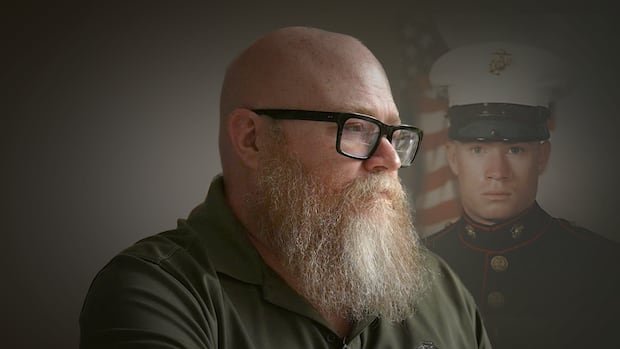
On September 11, 2001, Barry Sward, a senior at Woodbridge High School in Virginia, witnessed the collapse of the twin towers on television, solidifying his decision to enlist in the U.S. Marine Corps. Motivated by a sense of national tragedy, he felt a strong urge to confront the enemy responsible for the attacks.
Expressing his feelings to CBC News’ chief correspondent Adrienne Arsenault, who was covering post-9/11 military recruitment at the time, Sward reflected on his desire for vengeance and justice against those behind the attacks. Following his enlistment, he underwent basic training at Parris Island, South Carolina, and soon after found himself deployed to Iraq as part of President George W. Bush’s “war on terror.”
Subsequent to the events of September 11, 2001, a 2019 Pew Research survey of 1,284 veterans revealed that post-9/11 veterans were approximately twice as likely to have served in combat zones compared to their predecessors. Consequently, they were more prone to both physical and mental scars from their wartime experiences.
Despite encountering emotionally traumatic situations, only a third of respondents sought help to address their struggles, according to the same survey. In a recent interview conducted by Arsenault in August, she revisited Sward, who now resides in Falmouth, Virginia, facing the lasting impacts of his deployment to Iraq, including a diagnosed back injury and post-traumatic stress disorder (PTSD).
In the aftermath of the September 11 attacks, there was a surge of patriotism and a wave of young individuals eager to serve their country. While media reports depicted long queues at military recruitment centers, indicating a heightened sense of national duty, Jason Dempsey, a Columbia University expert on American civil-military relations, noted that this surge was more of a temporary phenomenon rather than a sustained trend.
Contrary to popular belief, the immediate aftermath of September 11 did not witness a significant increase in military enlistments compared to other periods, as per data from the primary branches of the military. Dempsey highlighted that motivations for joining the military often stem from familial traditions, economic stability, educational opportunities, and enlistment during periods of elevated unemployment rates.
The generation of post-9/11 recruits found themselves embroiled in enduring conflicts in Afghanistan and Iraq, with the latter recently seeing the official withdrawal of U.S. forces. Sward’s experiences in Iraq were marked by the challenging and frustrating realities of warfare, notably the Battle of Nasiriyah, where he witnessed the loss of fellow marines and grappled with the limitations of intervention in the face of conflict.
Reflecting on his service in Iraq, Sward acknowledged the complexities and frustrations of war, particularly in light of subsequent revelations casting doubt on the initial justifications for the invasion. Despite the toll of war, Sward maintained his pride in his service while recognizing the personal cost and the importance of seeking help for his PTSD.
Over time, Sward’s journey towards healing and understanding his trauma has been supported by therapy and the unwavering care of his wife, Rebecca. Their experiences underscore the prevalence of PTSD among post-9/11 veterans and the evolving attitudes towards mental health within the military community.
As he navigates the aftermath of war, Sward remains resolute in his pride for his service while cautioning against the path of military enlistment for his children, choosing instead to cherish the present moment with his family as a testament to his life’s journey.

