
Hating a movie can be just as engaging and possibly more enjoyable than loving it. A film that is remarkably foolish, poorly conceived, or morally corrupt can offer ample material for contemplation and debate, similar to a genuinely moving one. In both scenarios, there is something worth investing attention in.
It is disappointing to come across a film like “The Social Reckoning.” This Aaron Sorkin-helmed sequel to “The Social Network,” the remarkable 2010 Facebook origin tale penned by Sorkin and directed by David Fincher, falls into the category of deplorable anti-art creations. This movie is so shallow and unoriginal that it hardly provokes genuine hatred, despite its claim of everlasting relevance. It is more of an insulting bore, lacking enough substance or perspective to even argue against, let alone passionately despise.
Focusing on the menace of social media and corporate-driven groupthink, “The Social Reckoning” could be seen as embodying the very issue Sorkin aims to expose. It highlights the abundance of low-quality, unengaging “content” inundating our feeds and For You pages. Despite its rich source material, the film disappoints due to the involvement of talented creatives in its cast and crew.
The narrative of “The Social Reckoning” tracks Facebook’s period of exponential growth and aims to critique one of the three tech overlords of the apocalypse. The other two are portrayed in Alex Gibney’s documentary “Musk” and Luca Guadagnino’s Sam Altman/OpenAI analysis “Artificial.” The implicit message here is that this project is a timely and insightful piece that will challenge perceptions and shake up the status quo.
However, the movie fails to deliver on its promises. Instead of a compelling narrative akin to “Spotlight,” audiences are presented with Jeremy Allen White as a Wall Street Journal reporter and Mikey Madison as a disillusioned Facebook product manager. They uncover a covert malpractice named MSI, which has led to governmental destabilization and truth distortion.
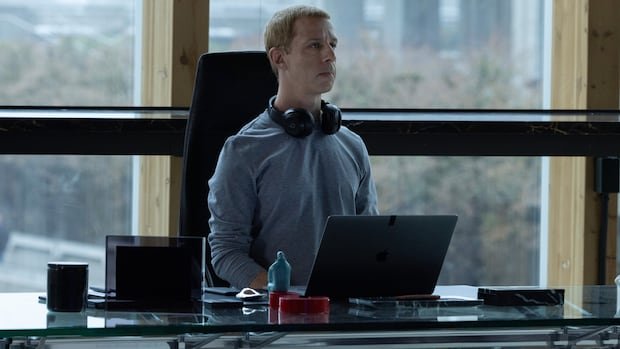
The portrayal of Mark Zuckerberg by Jeremy Strong is lackluster compared to Jesse Eisenberg’s nuanced interpretation in the original film. Strong’s performance, while highlighting Zuckerberg’s eccentricities, feels uninspired and peripheral to the plot. The character’s presence adds little narrative value, serving more as a backdrop to the central conflict.
The film’s shortcomings can be attributed to Sorkin’s direction, which fails to capitalize on the potential of the storyline. The lack of depth and coherence in the narrative results in a lackluster and cliché experience for viewers. Despite the film’s topical relevance, it falls short in delivering a compelling and engaging storyline.
Overall, “The Social Reckoning” is a missed opportunity, lacking the courage and originality to make a lasting impact. It fails to evoke strong emotions, whether positive or negative, and ultimately leaves audiences with a sense of disappointment and dissatisfaction.

