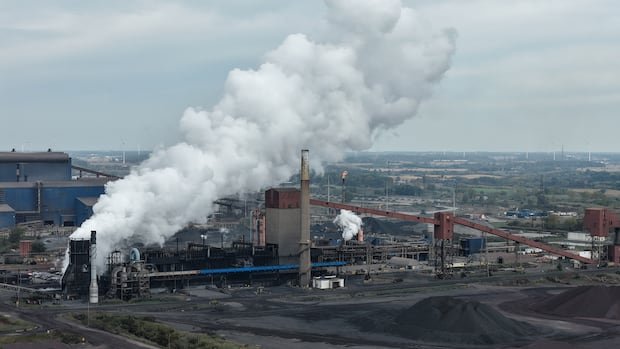
Stelco Holdings faces a critical deadline to present a rescue plan for hundreds of steelworkers in Ontario to avert ongoing layoffs, with potential legal ramifications from the Canadian government looming. The situation presents a significant test of accountability for foreign investors as Prime Minister Mark Carney endeavors to attract more international investment to Canada amid a contentious trade dispute with the United States.
Looking back at a similar scenario involving the U.S. steelmaker’s acquisition of Stelco in 2007, foreign investors are required to commit to undertakings under the Investment Canada Act to ensure a positive impact on the domestic economy. However, when faced with the 2008 financial crisis, U.S. Steel failed to meet its commitments, resulting in significant layoffs and operational closures in Canada.
In response, the Canadian government took legal action against U.S. Steel in 2009, leading to an out-of-court settlement in 2011. The settlement included new commitments from U.S. Steel to maintain production in specific locations and make substantial investments in modernization. Despite these agreements, U.S. Steel Canada eventually filed for creditor protection in 2014, leading to a change in ownership and the revival of the Stelco brand in 2017.
Fast forward to 2024, Cleveland-Cliffs received approval for a multi-billion-dollar acquisition of Stelco, with conditions to preserve Canadian jobs. However, recent announcements of production cutbacks and layoffs at Stelco have raised concerns, prompting Industry Minister Mélanie Joly to demand a job retention plan within a tight timeframe or face legal consequences.
The potential legal battle ahead reflects the complex dynamics between business strategies, market conditions, and government regulations. While the situation may escalate to court proceedings, the outcome remains uncertain, with the possibility of new commitments or settlements to address the current challenges faced by Stelco.
The developments at Stelco also come at a crucial juncture for the Canadian government’s investment agenda, as it seeks to attract substantial investments and diversify economic partnerships beyond the United States. Balancing regulatory enforcement with economic growth objectives presents a delicate challenge for policymakers, highlighting the need to uphold rules while fostering a conducive investment climate.