
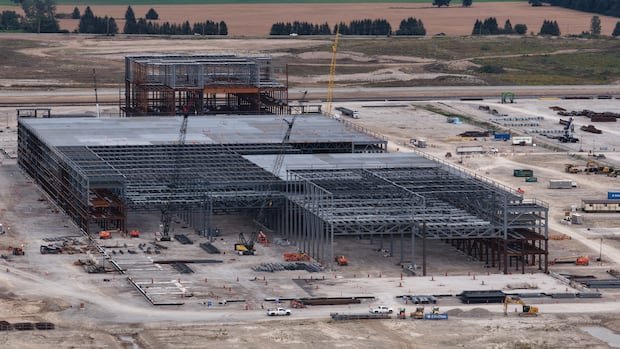
The electric vehicle industry has seen setbacks in major EV and battery projects across Ontario, Quebec, and British Columbia, as automakers and suppliers adjust to lower-than-expected demand. Volkswagen’s PowerCo battery plant in St. Thomas, Ont., has delayed production by two years to 2029 due to changing market demand.
Critics are questioning whether Canada overestimated the growth rate of the EV market. However, proponents argue that these delays are part of a long-term shift towards electrification. Grieg Mordue, a former Toyota executive and retired McMaster University professor, highlights concerns about the scale and location of Canada’s EV investment strategy.
Volkswagen planned to produce enough battery cells for one million EVs annually at the St. Thomas plant. Mordue raises concerns about the efficiency of this plan, given the logistical challenges of distributing batteries to VW’s assembly operations. Despite the delay, VW reaffirms the importance of the plant in its North American battery strategy.
While some critics doubt the current EV demand, experts like Joanna Kyriazis from Clean Energy Canada view the investments as essential for Canada’s auto industry’s survival in the 21st century. They emphasize the importance of maintaining competitiveness in the global auto market through electric vehicles and related components.
Ross McKitrick, a University of Guelph economics professor, expresses skepticism about the government’s efforts to stimulate EV demand artificially. He warns that if consumer willingness to purchase EVs does not align with government expectations, it could have negative consequences for automakers and the economy.
Despite the challenges, the broader rationale for domestic battery production remains valid, with a global push towards electrification. The article concludes with a discussion on the evolving regulatory landscape in Canada and the ongoing efforts to boost electric vehicle adoption.

