
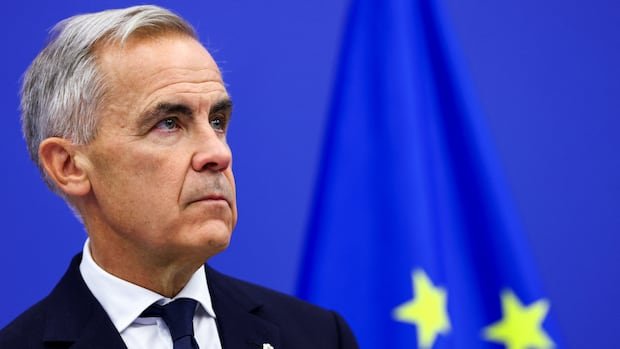
Prime Minister Mark Carney recently urged for stronger trade and defense connections at the European Parliament, emphasizing shared values such as democracy and trustworthiness. However, concerns have been raised by experts regarding the alignment of certain European allies with far-right ideologies, similar to those of U.S. President Donald Trump.
Amid the backdrop of Trump’s trade policies, Canada is expanding its trade partnerships globally. Nonetheless, political scientists caution that many far-right factions in Europe echo Trump’s stances on issues like immigration and isolationism, posing a challenge to liberal democracy.
In Germany, the Alternative for Germany (AfD) party, classified as extremist by the German intelligence service, has made significant gains in recent regional elections. The rise of such nationalist and isolationist parties presents a potential threat to democratic values. Meanwhile, in France, Marine Le Pen’s National Rally party has quadrupled its seats in the French Senate, with Le Pen sharing similar views with Trump on various issues.
Political analysts point out that the leadership of key EU countries like France and Germany holds significant sway within the European Union. While the EU’s multi-level governance system may help counter the influence of far-right movements, the potential for shifts in domestic political landscapes remains a concern.
Looking ahead, it is crucial for Canada to diversify its alliances to mitigate reliance on any single trade partner, a lesson learned from dealing with Trump. Strengthening relationships with individual EU member states in crucial areas like energy and defense is essential. Additionally, leveraging the EU’s institutional stability can provide a more reliable long-term strategy for Canada.
Despite the trend towards the far right in parts of Europe, experts believe the continent as a whole will uphold liberal democratic values. Canada’s wealth of critical minerals and its reputation as a steadfast democratic partner can position it as an indispensable ally in navigating the evolving political dynamics in Europe.
Global Affairs Canada did not respond to inquiries regarding its response to these developments. As Canada seeks to navigate this changing landscape, building strong and diverse alliances will be key to ensuring stability and continuity in its international partnerships.

