
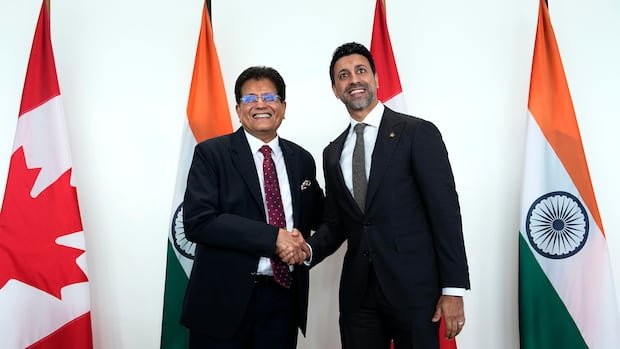
When trade ministers from some of the world’s largest economies convene in Wisconsin today, the prominent issue at hand will be the impact of U.S. President Donald Trump’s trade policies. The G20 trade ministers’ meeting in Milwaukee poses challenges for officials as they navigate the repercussions of Trump’s tariffs and trade barriers. Countries like Canada are reevaluating their trade relationships amid the uncertainties brought by the America-first approach of the Trump administration.
The summit is expected to feature high-level discussions where countries explore strategies to maneuver around the current trade landscape. Canada aims to enhance talks with global trading partners and lessen its reliance on the U.S. economy. International Trade Minister Maninder Sidhu emphasized the importance of trade diversification as a key strategy for Canada, noting a significant increase in non-U.S. trade over the past year.
Sidhu is leading the Canadian delegation at the meeting, focusing on engagements with international counterparts rather than bilateral talks with the U.S. Negotiations between Canada and the U.S. hit a roadblock in August, and the recent imposition of import bans further complicates the trade relationship between the two countries.
Additionally, discussions at the summit will center on the Trump administration’s agenda, including proposed changes to World Trade Organization (WTO) rules. The administration aims to reform the WTO’s Most-Favoured Nation (MFN) principle, a move that could potentially disrupt global trade dynamics. The push for these changes raises concerns about increased uncertainty for businesses operating within international supply chains.
While the U.S. advocates for overhauling international trade rules, the WTO has struggled to reach a consensus on reforms amid differing economic priorities and interests among its member countries. The organization has warned of the need for global trade rule reforms to prevent economic fragmentation and mitigate potential negative impacts on the global economy, particularly for developing nations.
In conclusion, the G20 trade ministers’ meeting serves as a platform for deliberating on critical trade issues amid evolving global dynamics and the changing trade landscape shaped by the policies of key economies.

