
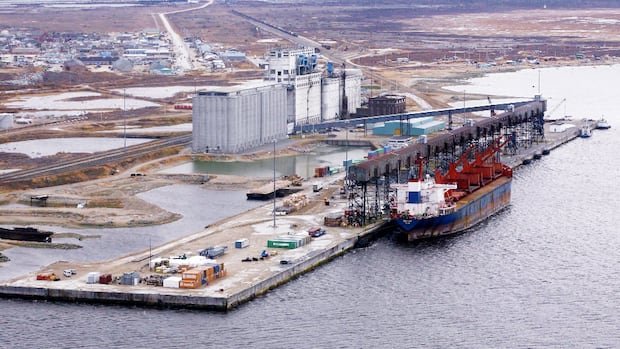
Piece by piece, akin to patches of ice melting away from an icy water passage, Manitoba is revealing its plan to enhance the Port of Churchill. Last week, Arctic Gateway Group, the port’s owner, disclosed the estimated cost of upgrading the port and the connecting railway system to be between $2 billion and $3 billion. This initiative aims to boost the port’s capacity for shipping commodities and to strengthen the Hudson Bay Railway for heavier cargo transportation.
Within the realm of major provincial projects, a $3 billion investment is not unprecedented in Manitoba. Concurrently, two other projects in the province, the extensive upgrades to Winnipeg’s largest sewage-treatment plant costing $3.2 billion and the proposed expansion of Manitoba Hydro’s gas-burning generating station in Brandon estimated at $3 billion, are in a similar financial league.
While the port and railway upgrades are essential for various future projects, the $3 billion Port of Churchill expansion was notably absent from discussions at Prime Minister Mark Carney’s recent investment summit in Toronto. Premier Wab Kinew has been advocating for a larger $79 billion port expansion project, including a liquefied natural gas terminal off the Hudson Bay shore, which the current upgrades are believed to precede.
The debate in Manitoba revolves around the delay in moving forward with the $3 billion port expansion and railway enhancements, given their perceived importance as foundational infrastructure. The provincial government retains the decision-making power on whether to proceed with these crucial upgrades.
The City of Winnipeg faced a mandatory decision to upgrade its North End Water Pollution Control Centre to comply with environmental regulations and accommodate future development. Manitoba Hydro is similarly under pressure to install three additional gas turbines in Brandon by 2030 to avert potential power shortages during peak winter periods.
While the Port of Churchill upgrades may seem less urgent, the project holds significant benefits for the town and numerous northern Manitoba communities. Concerns persist about the economic viability of the port expansion, with the federal government yet to release a commissioned market analysis, hinting at potential international market uncertainties.
Premier Kinew’s focus on a larger liquefied natural gas venture underscores the perceived economic potential of such grand projects. However, experts emphasize the strategic importance of expanding the Port of Churchill as a safeguard for Canada’s trade interests, especially amid changing global dynamics.
A key argument supporting the port expansion is its role as an insurance policy for Canada’s trade routes, offering an alternative to reliance on U.S. trade routes. Despite the potential economic benefits, the primary rationale for expanding the port lies in its strategic value rather than immediate profitability.
Experts stress the national significance of expanding the Port of Churchill, highlighting the broader implications beyond mere financial returns. The unique challenges posed by operating an isolated port in harsh conditions underscore the importance of considering resilience and sovereignty over immediate financial gains.
The financial burden of such a demanding project raises questions about funding sources, particularly as the province lacks a self-sustaining revenue stream to support the $3 billion endeavor. With significant debt obligations already weighing on Manitoba, the prospect of funding the Churchill project remains a complex and challenging task.
In the absence of viable funding options from local stakeholders, including Arctic Gateway Group, the federal government emerges as a potential lifeline to ensure the realization of the Port of Churchill expansion.

