
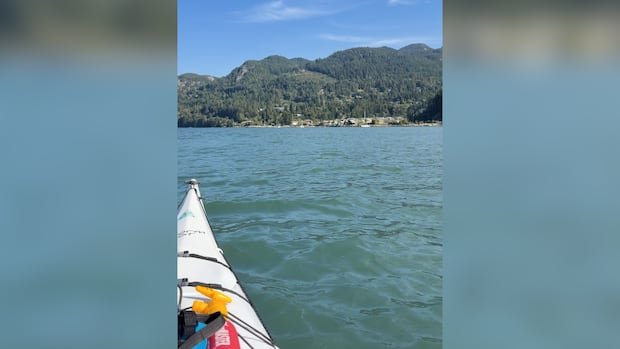
Maritime authorities are cautioning against relying on AI chatbots for weather guidance after a kayaker’s near-miss incident on the South Coast of British Columbia. Jonathan Levine narrowly escaped a capsized kayak situation while paddling in Howe Sound, a routine activity he and his wife usually enjoyed from their residence in Furry Creek, approximately 35 kilometers north of Vancouver. Faced with challenges in obtaining clear information online, the couple turned to an AI chatbot to determine the optimal time for their paddle.
Following the AI’s suggestion, the couple ventured towards Britannia Beach under initially sunny and seemingly tranquil conditions, prompting them to extend their outing. However, their situation took a turn for the worse when they encountered unexpectedly large waves, approximately five to six feet high, causing Levine’s kayak to sway uncontrollably. Howe Sound, known for sudden strong winds in the afternoons due to its coastal fjords and temperature differentials, also experiences robust currents from river outflows.
As they navigated around Minaty Bay, Levine’s kayak overturned, throwing him into the water while struggling to cling to his life jacket amidst the turbulent waves. Despite being battered by the sea for 15 minutes, Levine, a 71-year-old, managed to maintain composure and continuously attempted to swim towards shore. With his wife alerting nearby boats and seeking help via her cellphone, long-time sailor Adrian Ward and firefighter Travis Welsh came to their rescue after spotting Levine’s distressed situation.
Following a successful retrieval, Levine expressed gratitude towards the strangers who aided him, emphasizing their calming and decisive actions. While his wife safely made it to shore, Levine underscored her pivotal role in the rescue, acknowledging her as his savior. Experts advise caution against relying solely on AI chatbots for weather information, recommending cross-referencing multiple verified sources for accurate wind, tide, and current forecasts. Additionally, possessing a marine VHF radio for swift communication in emergencies is strongly advocated by maritime safety professionals to ensure boater preparedness and safety on the water.

