
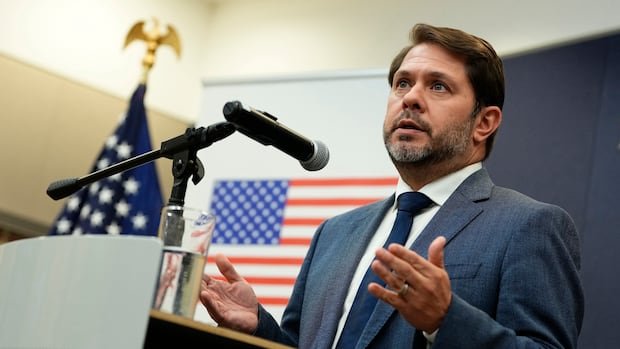
Democratic politicians believe that a strong performance in the upcoming U.S. midterm elections in November could impact the ongoing trade war between Canada and the United States. Senator Ruben Gallego from Arizona stated in an interview that such an outcome would send a clear message to the White House and other Republicans that tariffs on goods from close allies like Canada are unpopular among Americans.
Currently, the Republicans hold control of the White House and both chambers of Congress, allowing President Donald Trump to push forward with his tariff agenda. However, concerns linger among some Republicans regarding the potential impact on their re-election prospects due to the escalating trade tensions.
Gallego criticized the tariffs, highlighting that they act as a tax on various Canadian goods, which he views as unnecessary. He emphasized that the tariffs are not achieving the goal of reindustrializing the U.S. and are straining relationships with valuable allies.
The senator expressed particular concern for the aerospace manufacturing sector in his state, which heavily relies on Canadian steel and aluminum subject to Trump’s tariffs. A recent report by TD Bank noted a slight rebound in U.S. manufacturing but highlighted challenges such as elevated energy costs and tariff-related pressures that could limit the sector’s growth.
Maine Governor Janet Mills suggested that a Democratic victory in both chambers of Congress could disrupt Trump’s tariff policies by allowing Congress to regain control over taxation and tariffs. While Trump has utilized Section 338 of the Tariff Act of 1930 to impose duties, some legislators have introduced a bill seeking to repeal this section due to the lack of checks and balances.
Despite the tensions, there is optimism for potential negotiations to de-escalate the trade dispute. Gallego stressed the importance of diplomatic efforts to reduce tensions gradually and facilitate dialogue between the U.S. and Canada. Governor Mills echoed the need for serious negotiations and the involvement of a third party to mitigate the damaging effects of the tariff battle on both economies.

