
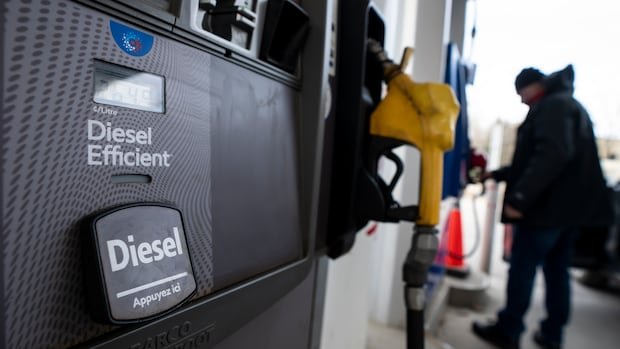
Diesel prices are surging amid global conflicts, causing significant challenges for trucking companies in Canada, experts reveal. Tej Dulat from the Canadian Truck Operators Association expressed concern over the escalating prices, emphasizing that commercial trucks consume large quantities of fuel weekly, making it a key cost for the industry. Since the spike in prices following the Russia-Ukraine conflict in 2022, margins have been tighter, leading companies to pass on the increased costs to consumers, potentially impacting grocery prices.
As of the latest data, diesel prices in Canada reached $2.62 per litre, exceeding last year’s rates by over a dollar. In Vancouver, prices soared to $2.92 per litre, reflecting the broader trend of rising fuel costs. The United States also witnessed record-high diesel prices, surpassing $6 US per litre.
While attention has focused on the impact of tariffs on Canadian goods, experts highlight that geopolitical tensions are currently exerting a more significant influence on oil prices. The ongoing conflicts, including the U.S.-Israel tension with Iran, are driving the spike in prices, posing the risk of inflation and affecting various industries reliant on diesel fuel, such as farming.
The shortage of diesel is a key concern, with exports from the Persian Gulf region significantly reduced due to geopolitical factors. Russia’s ban on diesel exports and the temporary closure of Canada’s largest refinery in New Brunswick further exacerbate the supply constraints. Despite the federal government’s measures, including the extension of the fuel excise tax suspension, experts warn that these actions may not fully alleviate the economic challenges posed by high diesel prices.
Looking ahead, energy analyst Dan McTeague warns that diesel prices typically escalate during winter, signaling a potentially expensive season for consumers and industries reliant on transportation. The impact of rising diesel costs on the entire food supply chain, including shipping, storage, and production, could lead to higher grocery prices. The convergence of various factors, such as extreme weather affecting harvests, is creating significant upward pressure on food prices, potentially establishing a prolonged period of elevated costs.
The uncertainties surrounding global trade and energy prices may result in a challenging environment for low-income Canadians in the foreseeable future. The evolving landscape of food production and trade dynamics suggests a shift towards higher and less stable prices, posing long-term challenges for consumers and industries alike.

