
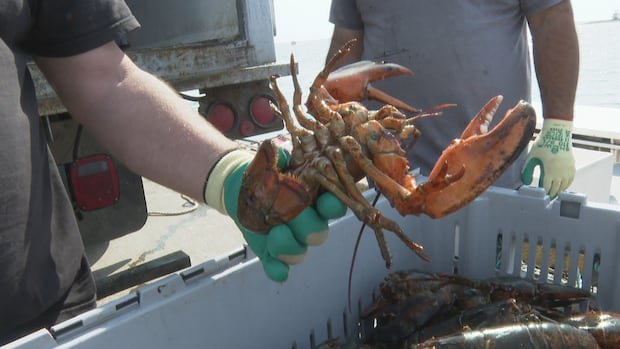
Pointe-du-Chêne is currently a popular spot for fishing activities, where individuals can be seen fishing off the pier and commercial vessels are actively engaged in lobster fishing in the Northumberland Strait.
Peter Wallace, a seasoned fisherman with almost five decades of experience, continues a family tradition that originated in 1917 when his grandfather acquired a lobster license for a mere 25 cents. Today, obtaining a similar license would cost a new entrant around $1 million, according to Wallace. Additionally, the purchase of a “half-decent” boat can range from $700,000 to $1.2 million, making it a significant financial commitment that most aspiring fishermen struggle to afford due to limited bank financing options.
Concerns have been raised within the industry about the increasing influence of seafood buyers and processors, who are stepping in to provide financial assistance to fishermen in exchange for control over their fishing licenses through what is known as controlling agreements. Martin Mallet, the Executive Director of the Maritime Fishermen’s Union, has expressed worries about the rise in such agreements, stating that they can essentially render the fisherman subservient to a third-party corporation, leading to various operational and safety issues.
Moreover, there are reports of financial arrangements where a significant portion of a fisherman’s earnings goes towards repaying loans, leaving them with minimal income. Fisheries and Oceans Canada has identified specific clauses in these agreements that indicate controlling arrangements, prompting the department to review and strengthen regulations to prevent exploitation of fishermen.
The issue of controlling agreements has attracted attention at various levels, with concerns raised about the potential implications for the independence and economic sustainability of the fishing industry in Atlantic Canada. Industry stakeholders are advocating for measures to preserve the traditional owner-operator model in fishing, emphasizing the importance of maintaining fishermen’s autonomy and preventing undue control by processors.
Calls have been made for the establishment of a national public financing program for fishermen, similar to what farmers have access to through Farm Credit Canada, to support the next generation of individuals entering the fishing industry. With many older fishermen set to retire in the coming years, there is a growing need to address the financial challenges faced by new entrants and ensure the continuity of the fishing tradition in the region.

