

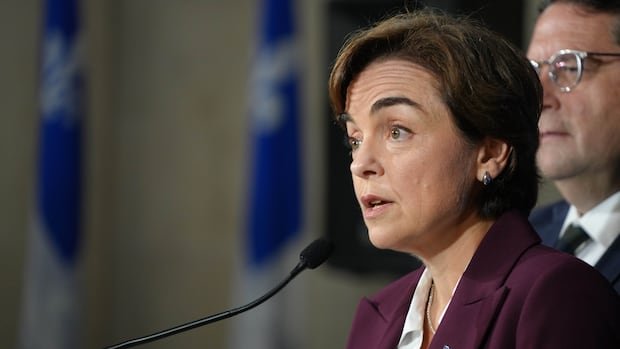
Quebec Premier Christine Fréchette issued a cautionary statement on the challenging times ahead during a press briefing on Tuesday morning, urging Quebec residents and municipalities to shift their focus from American businesses to supporting the local economy.
Emphasizing resilience against U.S. policies, Fréchette labeled President Trump as a bully and declared Quebec’s commitment to use all available resources to increase the procurement of locally-made products. These efforts aim to safeguard jobs, the economy, and workers in the region.
In light of Canada’s retaliatory measures against certain American goods, introduced at midnight on Monday, Fréchette, who is currently engaged in a provincial election, unveiled new initiatives to assist the province in dealing with the repercussions. These measures include granting advantages to Quebec-based companies in public tenders and facilitating their expansion into other Canadian markets.
The premier disclosed that these actions will impact $1.5 billion in contracts over the next four months, noting that American firms typically constitute less than 10 percent of bidders for public contracts.
Responding to concerns about potential retaliation from President Trump, Fréchette acknowledged the possibility but affirmed Quebec’s determination to persevere in strengthening the economy and fostering unity. She encouraged all stakeholders to join the movement towards economic resilience and solidarity.
On a related note, U.S. Trade Representative Jamieson Greer hinted at potential retaliatory tariffs on Canadian goods, possibly as early as the same day.
Fréchette highlighted the anticipated impact of Canada’s counter-tariffs, projecting that they will affect 8.8 percent of the country’s imports, with Quebec’s imports accounting for five percent of that total. She also mentioned the ongoing assessment of the tariffs’ influence on Quebec’s employment landscape, citing 18,000 job losses in August as potentially linked to the tariff conflicts.
Moreover, the premier called for efficient federal rebates to mitigate the burden of counter-tariffs on Canadian businesses and urged the government to streamline the reimbursement process. She clarified that there are no imminent plans for a meeting of premiers in the near future.
Stepping away from her campaign activities, Fréchette convened her cabinet on Monday to devise a strategic response to Canada’s retaliatory tariffs ahead of their implementation. She rejected accusations from rival parties that she was exploiting the tariff situation for political gain, asserting the necessity of adapting to the current economic challenges.

