

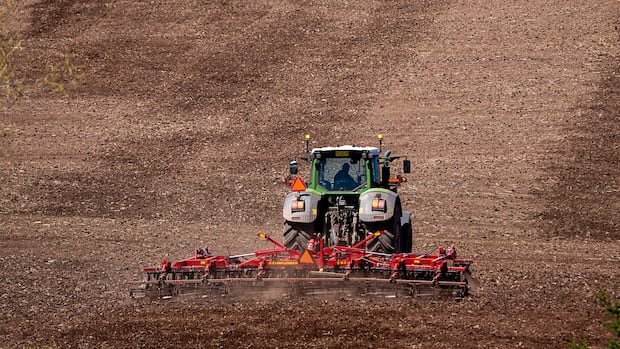
A year following a severe drought that adversely impacted farms in the East Coast, some Maritime growers are now witnessing signs of recovery. Favorable weather conditions, including a mix of rainfall and sunshine, have aided several crops in regaining stability, although remnants of damage from the scorching and arid summer of 2025 still linger.
Danny Dill, a renowned giant pumpkin grower and owner of Howard Dill Enterprises in Windsor, N.S., expressed the unprecedented nature of last year’s drought. He highlighted the historic severity, emphasizing that even individuals in their 90s claimed such extreme conditions were unparalleled in their lifetime. According to Dill, climate change, which leads to more frequent and intense weather phenomena, is a reality evident on farms.
Despite having to turn away pumpkin customers due to stock shortages last fall, Dill anticipates meeting all orders this year owing to the favorable rainfall patterns. However, he noted that the large pumpkin varieties are currently smaller than usual, pondering whether last year’s drought influenced this outcome.
Trevor Hadwen, an agroclimate specialist with Agriculture Canada, underscored the significance of the previous year’s drought in a region unaccustomed to prolonged dry spells. The federal department highlighted severe drought conditions in Nova Scotia, eastern Newfoundland, southeastern New Brunswick, and parts of Prince Edward Island in August last year.
Patrick O’Neil, the executive director of the Wild Blueberry Association of North America, described last year’s drought as “devastating,” mentioning the challenges faced by farmers due to minimal rainfall and scorching heat. The impact extended to wildfires in multiple provinces, leading to governmental restrictions on activities.
A 2020 report from Agriculture Canada outlined the implications of climate change on farming, emphasizing rising temperatures, extreme weather events, extended drought periods, milder winters affecting pests and diseases, and the risk of rising sea levels and erosion in the Atlantic region.
Farmers like Danny Dill have observed a noticeable shift in weather patterns over the last 15 years, with the past five years witnessing a surge in extreme weather conditions, ranging from floods and storms to wildfires and droughts. This shift has caused anxiety among farmers in the area, including Jordan Eyamie of Webster Farms Ltd. in Cambridge, N.S., who faced yield losses last year but found relief in this year’s increased rainfall.
While some crops have shown signs of recovery, Hadwen cautioned that certain regions, particularly the Northumberland Shore area in northern Nova Scotia, continued to experience drier than normal conditions. Despite the challenges, ongoing efforts aim to mitigate the impacts of climate change on agricultural practices in the region.
[End of rewritten content]

