

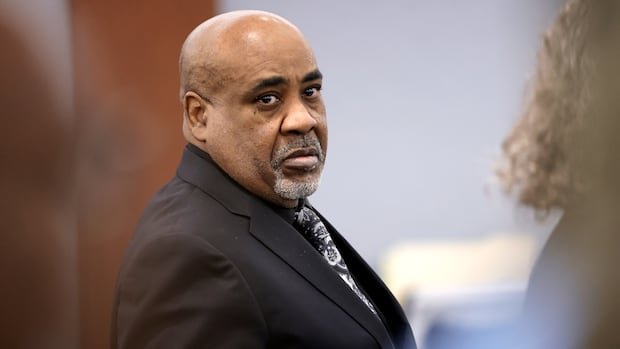
In a significant development in the long-standing case of rap legend Tupac Shakur’s murder, Duane “Keffe D” Davis, aged 63, has been found guilty by a jury for orchestrating the 1996 killing. The conviction on charges of murder using a deadly weapon carries the potential for a life sentence for Davis. The verdict was delivered after a three-hour deliberation by the jury following a trial spanning several weeks in Las Vegas.
Following the announcement of the verdict, emotions ran high in the courtroom. Shakur’s sister, Sekyiwa “Set” Shakur, was visibly emotional, while Davis’s son covered his face in response to the outcome. Chief Deputy District Attorney Binu Palal asserted in his closing arguments that Davis armed himself and pursued Shakur and Death Row Records co-founder Marion “Suge” Knight after an altercation involving Davis’s nephew earlier in the evening. Palal acknowledged discrepancies in Davis’s recounting of events over the years but maintained that the consistent detail was Davis’s presence inside a white Cadillac from which the fatal shots were fired.
Defense attorney Michael Sanft questioned the absence of concrete evidence, apart from Davis’s own statements, placing him at the scene in Las Vegas or inside the Cadillac during the shooting incident. Referring to the lack of surveillance footage and phone records corroborating Davis’s presence, Sanft emphasized the prosecution’s reliance solely on Davis’s accounts. The trial highlighted the high-profile nature of the case, which has garnered widespread attention from hip-hop enthusiasts and legal observers alike.
Tupac Shakur, a revered figure in the music industry, was tragically gunned down in Las Vegas on September 7, 1996, while waiting at a red light. Despite years passing without any charges filed in connection to the killing, Davis eventually emerged, claiming involvement in the incident. Davis alleged that the shooting was a retaliatory act following an altercation between Shakur’s entourage and his nephew. Under Nevada law, aiding in a murder can lead to a conviction for the crime, with Davis being the sole surviving individual among the four individuals allegedly present in the Cadillac during the shooting.
Prosecutor Palal emphasized to the jury that Davis’s statements did not necessarily require external verification if deemed credible. While it was not argued that Davis physically pulled the trigger, the prosecution contended that his role in providing the weapon and orchestrating the attack made him criminally liable. The prosecution further asserted that the shooting was premeditated, citing testimonies and Davis’s own admissions regarding the group’s deliberate pursuit of Shakur before the fatal encounter.
During the trial, Davis’s 2019 memoir, “Compton Street Legend,” came under scrutiny, with Palal highlighting consistencies in Davis’s narrative despite minor alterations in details. The defense’s assertion that Davis altered accounts for financial gain was dismissed by Palal, who accused Davis of capitalizing on the murder for personal profit. Notably, Davis’s reluctance to disclose the identity of the shooter, as well as his maintenance of a scrapbook featuring articles related to Shakur, were highlighted as incriminating factors by the prosecution.
The outcome of the trial marks a significant milestone in the prolonged quest for justice in Tupac Shakur’s murder, underscoring the enduring impact of the case on the music industry and legal realm.