

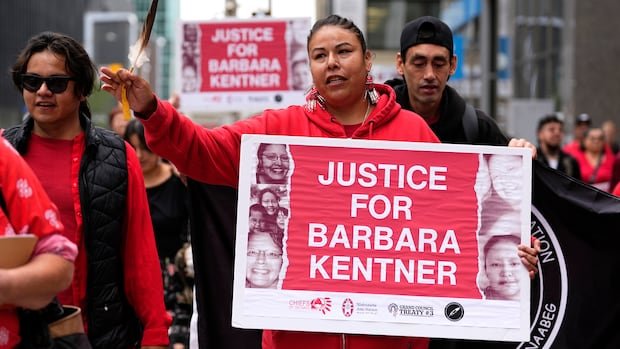
Family and supporters of Barbara Kentner, alongside Indigenous leaders, took to Parliament Hill in Ottawa to express their concerns regarding the recent full parole granted to the individual responsible for Kentner’s death. Kentner, a 34-year-old from Wabigoon Lake Ojibway Nation, passed away in 2017 due to medical complications resulting from being struck by a trailer hitch thrown by Brayden Bushby from a moving vehicle.
Bushby, now 27, was released on full parole under certain conditions on August 13, according to documents obtained by CBC News. Ahead of the march in Ottawa, Connie Kentner, Barbara’s sister, emphasized the impact of the parole decision on their family, the community, and Indigenous women and girls at large.
The decision documents from the Parole Board of Canada (PBC) stated that Bushby’s full parole release was deemed not to pose excessive risk and would aid in his reintegration into society as a law-abiding citizen. However, Connie Kentner expressed disappointment in feeling let down by a justice system that ought to acknowledge and respect crime victims.
The Kentner family was unaware in advance of Bushby’s full parole status, similar to when he was granted day parole in August 2023, as reported by CBC News. Subsequently, his day parole was revoked in July 2024 due to violations, but it was reinstated in December 2025 for a six-month period. Bushby was denied full parole at that time, with an extension of his day parole granted in June 2026.
During the recent march, a PBC representative accepted a letter from Barbara’s family. The PBC, in response to the family’s concerns, expressed sympathy for their loss and outlined the rights of registered victims in receiving information and participating in parole-related processes.
Chiefs of Ontario issued a statement calling for a culturally safe support service for First Nations victims and families navigating the federal corrections and parole system. The release emphasized the need for families to be informed directly of hearings and decisions, supported in exercising their rights, and provided with continuous assistance throughout the process.
Various Indigenous leaders, including those from Nishnawbe Aski Nation, Kitigan Zibi Anishinabeg, and the Assembly of First Nations’ 2SLGBTQQIA+ Council, joined the march in solidarity. Grand Chief Francis Kavanaugh of Grand Council Treaty #3 condemned the parole decision, highlighting the systemic racism and violence faced by Indigenous women, girls, and two-spirit individuals.
Connie Kentner vowed to continue sharing her sister’s story, emphasizing Barbara’s existence beyond being a victim and the ongoing pursuit of justice and accountability. The march drew attention to the need for systemic changes in addressing the safety and rights of Indigenous communities.
Support services are available for those affected by missing and murdered Indigenous people through a national hotline and mental health counseling resources such as the Hope for Wellness hotline.

