

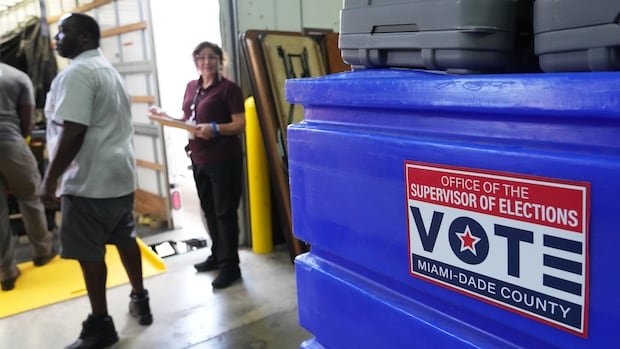
The recent approval by the U.S. Supreme Court of President Donald Trump’s restrictions on mail-in voting has raised concerns about the voting process used by nearly one-third of the country. While the decision may not result in immediate changes for the upcoming November midterms, it has created uncertainty among states that rely on mail-in voting.
In an unsigned order on Monday, the majority of the high court stated that it has not yet determined the constitutionality of Trump’s order, but noted that the states challenging it do not have the legal standing to do so. Justice Ketanji Brown Jackson expressed dissent, cautioning that the decision could introduce unnecessary chaos and uncertainty into the midterm elections.
Trump’s executive order, issued in March, directs his administration to compile lists of eligible voters and instructs the U.S. Postal Service to only deliver mail-in ballots to individuals on those lists. A separate injunction preventing the postal service from implementing these changes is still in place. However, the administration has requested the removal of this injunction and has introduced new regulations that would take effect once legal obstacles are cleared.
These new rules mandate specific envelope formatting for mail ballots, potentially requiring jurisdictions to revise their procedures. States must also utilize an electronic system to identify voters using mail-in ballots; failure to comply could result in ballots not being sent out.
Tammy Patrick, from the Elections Center, highlighted the challenges of implementing these new rules, emphasizing that no state currently conducts elections in the manner outlined by the administration. Jesse Salinas, registrar of Yolo County in California, noted the imminent distribution of ballots in his state and the practical difficulties of making last-minute changes to the election process.
Despite previous setbacks, including judicial blocks on new voting restrictions and stalled legislation, the Trump administration continues its efforts to reshape voting procedures. The administration faced a recent defeat when the Supreme Court ruled that states can count ballots arriving after election day. Additionally, attempts to obtain voter information from states have been met with legal resistance, with concerns raised over privacy laws.
While voter fraud exists on an individual level, there is no substantial evidence to support claims of widespread fraud as alleged by Trump. The partisan divide in mail-in voting preferences has become more pronounced, with Democrats increasingly favoring mail voting over Republicans. Trump’s objections to mail-in voting, rooted in concerns about fraud, have been a recurring theme in recent elections.
The ongoing legal and political battles surrounding voting procedures underscore the significance of the upcoming elections and the potential impact on the democratic process.

