

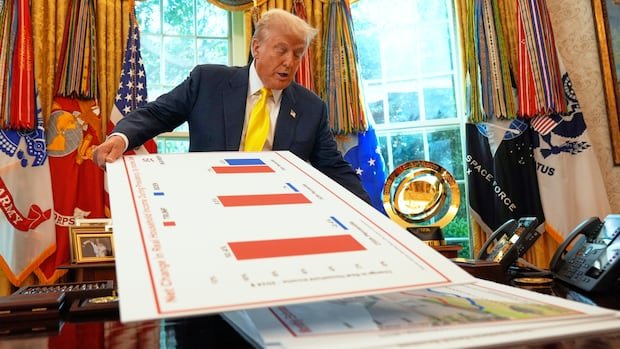
In his state of the union address in March 2025, U.S. President Donald Trump expressed confidence in generating trillions of dollars through tariffs to boost job creation significantly. Trump had previously touted tariffs as a means to reduce the $21 trillion national debt and cut taxes for Americans during his first term.
Despite these promises, the expected job growth did not materialize, and the U.S. government debt recently surpassed $40 trillion, leading to concerns in the bond market and maintaining high yields and interest rates. While tariffs have caused challenges for some, they have also resulted in substantial gains for certain sectors of the economy.
Economists highlight that tariffs in the U.S. have led to a significant wealth transfer from lower-income and middle-class individuals to wealthy corporations and well-connected entities. This shift aligns with the broader economic strategy of the Trump administration and the Republican Party, which has utilized tax policies to achieve similar outcomes.
Tariffs, by design, disproportionately impact lower-income households as they consume a higher percentage of their income. The tariffs predominantly affect purchases of manufactured goods, impacting the less affluent more than the wealthy who spend more on services and non-tariff-affected items. This disparity in impact has raised concerns about the regressive nature of tariffs and their contribution to wealth concentration.
The implementation of tariffs in the U.S. has also revealed a system that favors large corporations through tariff exemptions and rebate programs. Notably, major companies like Walmart and Target have received substantial refunds, while smaller businesses and individual consumers have not benefited to the same extent. The arbitrary nature of these exemptions has raised questions about fairness and transparency in the tariff system.
The political connections and lobbying efforts of corporations have played a significant role in securing tariff exemptions, highlighting concerns about favoritism and inequity in the process. The lack of transparency in tariff-related decision-making has further exacerbated these issues, leading to criticisms of the current tariff regime’s effectiveness and fairness.
Despite claims that tariff refunds would benefit consumers, evidence suggests that the burden of tariffs falls primarily on U.S. buyers, with minimal relief reaching the end consumer. While some corporations have pledged to lower prices due to the refunds, the overall impact on consumer prices remains a point of contention among economists.
In conclusion, the wealth distribution effects of Trump’s tariffs, coupled with broader tax policies, have raised questions about their efficacy and equity. The inadequate revenue generated by tariffs to offset tax cuts for the wealthy, coupled with escalating national debt and interest rates, underscore the complexities and challenges of using tariffs as a fiscal tool. Economists suggest exploring alternative revenue-raising methods to achieve economic goals more effectively than tariffs.

