

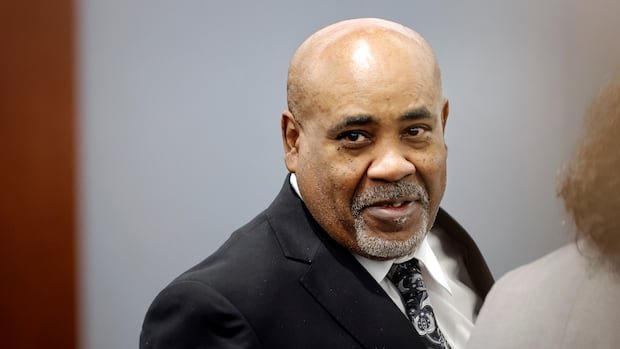
Jurors were presented with an audio recording from 2008 where Duane (Keffe D) Davis claimed that his nephew Orlando (Baby Lane) Anderson was the one who shot and killed rapper Tupac Shakur. Davis, who was allegedly involved in orchestrating the 1996 murder of the hip-hop star in Las Vegas, revealed to Los Angeles police during the interview that he and Anderson were in a white Cadillac with two other individuals when the shooting occurred.
According to Davis’s account, the Cadillac pulled up next to a car carrying Shakur and Death Row Records head Marion (Suge) Knight. Davis mentioned that he would have shot if the car had been on his side, but since it wasn’t, he passed the gun to Deandre “Big Dre” Smith, who refused it. Anderson, seated in the back, then took the weapon and fired the shots.
This disclosure marked the first time Davis openly discussed his role in the crime. The prosecution is relying heavily on Davis’s interviews with law enforcement, podcasts, and his co-authored memoir, “Compton Street Legend,” as crucial evidence in the case against the 63-year-old. Despite initially suggesting that Knight or Sean (Diddy) Combs might have been involved in Shakur’s shooting, Davis has pleaded not guilty to the charges.
During the trial, Davis’s lawyer dismissed the prosecution’s narrative as fiction and criticized the lack of evidence supporting his client’s statements. The detectives who interviewed Davis were initially investigating the 1997 killing of Shakur’s rival, the Notorious B.I.G., but Davis was eventually ruled out as a suspect.
Prosecutors argue that Davis breached confidentiality by discussing the shooting in subsequent interviews and publications, rendering any prior agreements with law enforcement null and void. They assert that Shakur’s murder was a retaliation for an earlier altercation between Shakur’s entourage and Anderson, which occurred after a Mike Tyson fight at the MGM Grand.
Despite Shakur’s tragic death in 1996, his legacy as a cultural icon and influential rapper has endured, solidifying his status as one of the most revered figures in the music industry.

