

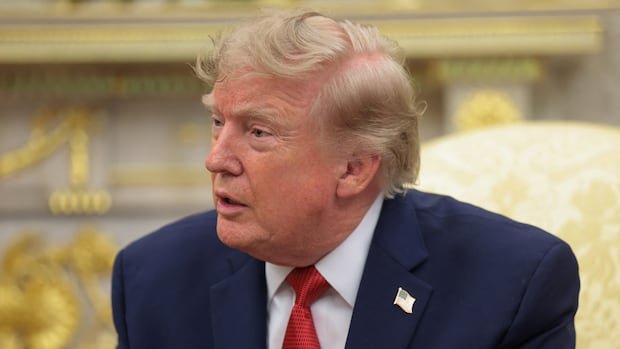
U.S. President Donald Trump has once again issued a warning to Oman as Iran discloses ongoing collaboration with the Gulf Arab nation on a strategy to regulate maritime traffic through the Strait of Hormuz. The complete reopening of this crucial water passage has been a primary demand from the United States.
Simultaneously, the 60-day negotiation window to reach a peace agreement between the U.S. and Iran was on the verge of expiration, with no indications of an extension and both parties seemingly as distant in their positions as they were at the beginning.
Iran has indicated progress in finalizing an arrangement with Oman concerning the passage of ships through the Strait of Hormuz, which links the two countries. Discussions are underway to formalize the specifics for a joint declaration. Iranian Foreign Ministry spokesperson Esmail Baghaei informed reporters in Tehran about the mutual understanding reached on the transit route map.
Although specific details were not disclosed, prior information suggests that the agreement would enable ships to navigate through the strait, entering near Iran and exiting close to Oman without incurring fees during an interim period. The U.S. has been seeking a viable agreement to reopen the strait before lifting its blockade on Iranian ports.
Following the February 28 attack by Israel and the U.S., Iran effectively closed the strait, through which approximately one-fifth of the world’s traded oil supplies used to pass. Baghaei acknowledged that the discussions with Oman have progressed slowly but emphasized the intention to finalize the agreement in the form of a comprehensive package.
In a previous encounter, Trump reportedly threatened Oman during an interview with Fox News journalist Trey Yingst, indicating that the U.S. would take military action against Oman if it obstructed the situation. This is not the first instance of Trump making such threats, as he previously stated in May that Oman must conform or face consequences.
Houthi rebels in Yemen, backed by Iran, claimed responsibility for attacking a ship and four military boats in the Red Sea near Mokha, off the Bab el-Mandab Strait. The rebels allegedly launched ballistic missiles at the vessels, resulting in their capsizing and burning. The rebels attributed the targeted vessels to Saudi Arabia, although no evidence was provided to support the claim.
Additionally, drone attacks targeted two officials in northern Iraq, with the regional counterterrorism service attributing the attacks to the border with Iran. The targeted officials included Masrour Barzani, prime minister of the northern Kurdish region, and a high-ranking regional intelligence officer. While there were no casualties reported, no group immediately claimed responsibility for the attacks.
Since the onset of the conflict involving the U.S. and Israel against Iran, there have been periodic attacks on U.S. military and diplomatic facilities in Iraq by Iran and Iranian-backed Iraqi militant groups. However, the direct assault on regional government structures on Monday marked a departure from the usual attacks. Barzani condemned the attack, labeling it as a significant escalation and a direct menace to the security and stability of the Kurdistan Region.
U.S. forces currently stationed in the Kurdish region of Iraq have commenced their withdrawal in anticipation of the agreed-upon deadline of September 30 to conclude the U.S. military presence in Iraq.

