

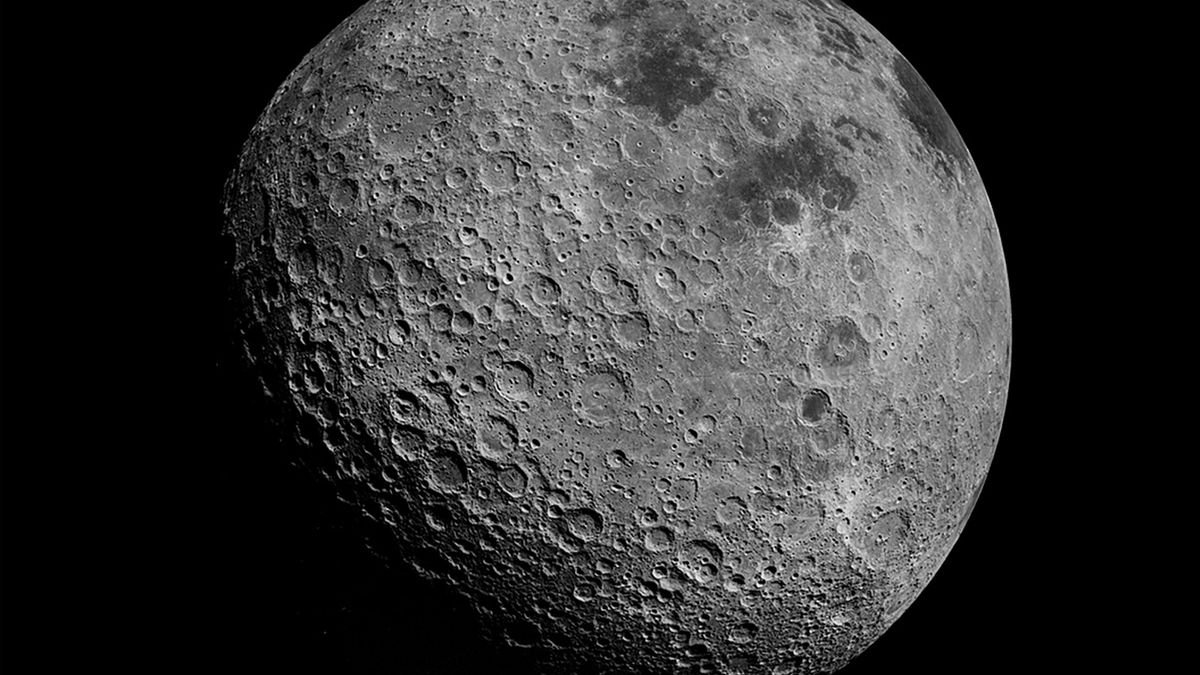
A portion of a rocket belonging to Elon Musk’s SpaceX recently collided with the Moon at a velocity of approximately 5,400mph, which is about seven times faster than the speed of sound. This segment of the Falcon 9 upper stage, equivalent in size to a five-story building and weighing around 4,000kg on Earth, has now impacted the lunar surface.
The rocket, part of a joint US-Japanese mission initiated by SpaceX in January 2025, was abandoned after successfully deploying two lunar landers. The collision is expected to generate dust and debris that will rise several miles above the Moon, potentially visible through Earth-based telescopes.
Astronomers anticipate that the impact will create a crater approximately 90ft wide and 16ft deep, though this size may not be discernible from Earth but should be visible to spacecraft. While experts like Bill Gray believe this specific impact poses no immediate threat, they emphasize the importance of avoiding similar incidents in the future, especially as humanity looks towards establishing long-term bases on the Moon.
This event marks the second instance of a spacecraft crashing into the Moon, following a Chinese rocket segment causing two craters on the far side of the Moon in 2022. The impact’s confirmation is eagerly awaited by telescopes in the Americas, providing crucial insights into the potential risks posed by space debris to future lunar missions.