

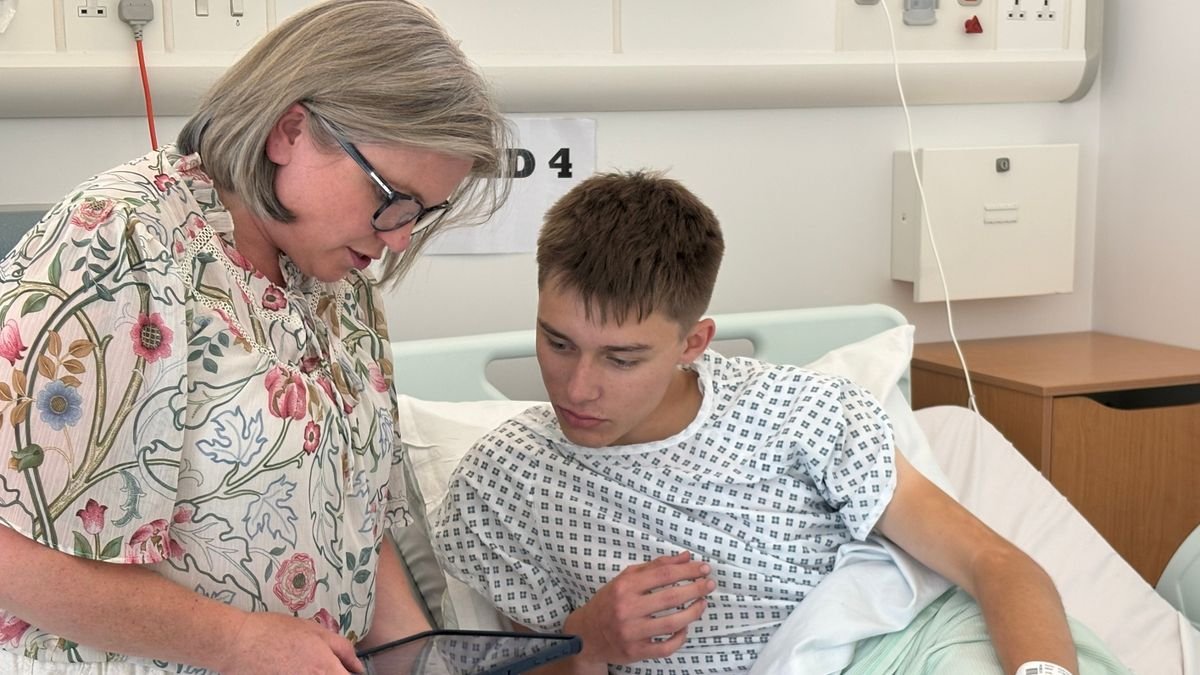
A young man, Ralph Seed, faced the prospect of amputating his foot due to a rare nerve condition causing severe pain. After living with debilitating foot pain for five years, Ralph underwent a groundbreaking surgery in the spine to disrupt the nerve signals responsible for registering pain in his brain. This innovative procedure made him the first teenager in the UK to receive such treatment.
The turning point came at the Royal Victoria Infirmary in Newcastle when the Inceptiv implant was activated, instantly relieving Ralph of his excruciating pain. Overwhelmed by the emotional moment, Ralph expressed his relief, stating that he was now pain-free for the first time in half a decade. With newfound hope, Ralph envisions a future free of constant pain, eager to pursue his passion for working with cars and embarking on a road trip with his family.
The spinal cord stimulation procedure involves using mild electrical currents to disrupt pain signals before they reach the brain, effectively altering nerve activity. Dr. Sachin Rastogi, Ralph’s physician at Newcastle Hospitals NHS trust, described the immediate and unprecedented results of the treatment, emphasizing the profound impact of pain relief on Ralph’s life.
Ralph’s journey began with discomfort while walking, eventually progressing to a point where he developed a limp. Despite undergoing various treatments and interventions, including surgery, injections, and therapy, his condition continued to worsen. The diagnosis of Complex Regional Pain Syndrome (CRPS) added complexity to his case, leading Ralph to contemplate amputation as a last resort before the groundbreaking spinal cord stimulation surgery.
CRPS is a condition where nerve signals inaccurately convey pain to the brain, resulting in severe and chronic pain primarily affecting a single limb. People with CRPS endure continuous burning, throbbing, or aching sensations in the affected limb, making even light touches unbearable.
Neurosurgeon Akbar Hussain performed the surgical implantation of thin wires near Ralph’s spinal cord, connected to a small battery beneath the skin. This battery emits gentle electrical pulses to disrupt pain messages, preventing the brain from interpreting them as pain, offering Ralph the relief he had long sought.
Ralph’s family, especially his mother Tara Walton, expressed joy at seeing him relieved of pain and returning to a normal life. They highlighted Ralph’s resilience and determination throughout his ordeal, praising his academic achievements and positive attitude. The Inceptiv device’s unique ‘closed loop’ feature, which adapts to the patient’s movements, holds promise for managing conditions like Parkinson’s and epilepsy.
Ralph and his family aim to raise awareness about CRPS and encourage others experiencing chronic pain to seek help. Grateful for the support and treatment he received, Ralph looks forward to a future free from the shackles of pain, eager to inspire and support others facing similar challenges.

