

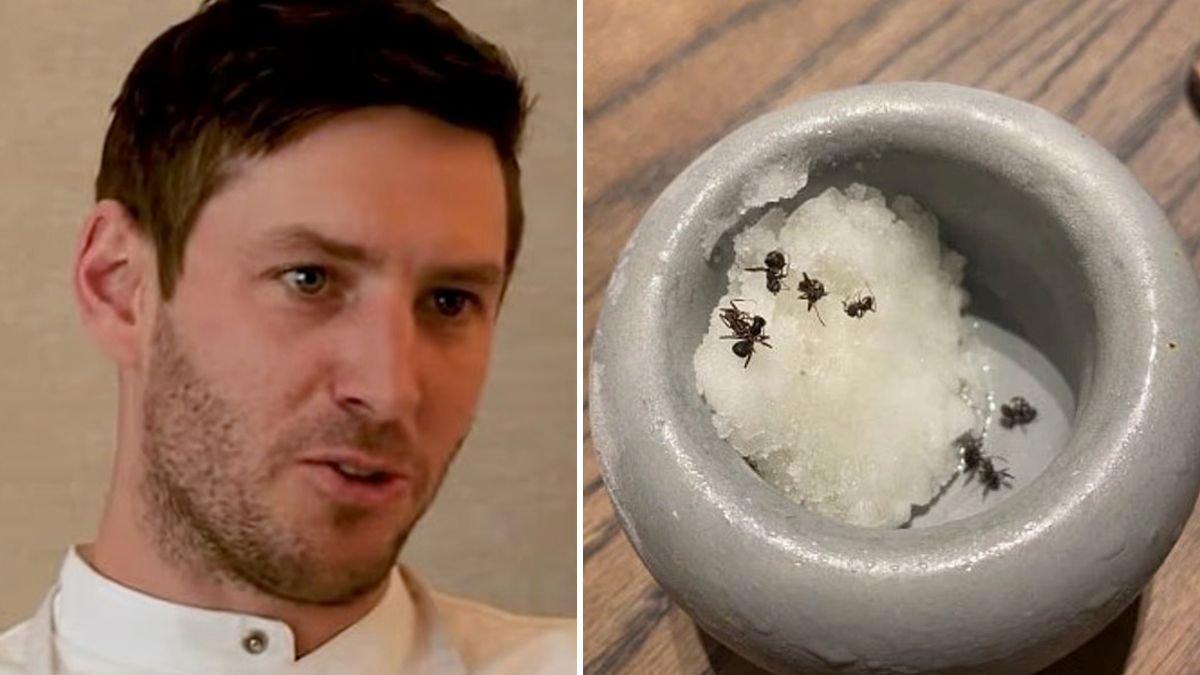
A renowned chef with two Michelin stars is facing legal trouble in South Korea for incorporating ants into desserts at a prestigious restaurant in Seoul. Joseph Lidgerwood, an Australian chef, achieved his second Michelin star in 2025 for his restaurant Evett in Gangham, serving Korean cuisine prepared over a wood fire.
Aside from using ants, Lidgerwood’s menu featured various unique seasonal ingredients like golbaengi (moon snails) and haesam (sea cucumber) gathered from South Korea’s east coast. He emphasized the importance of highlighting unique ingredients through different culinary techniques, such as pickling and roasting.
Evett initially earned a Michelin star just a year after opening in 2018, catering to Seoul’s discerning diners. However, Lidgerwood faces potential imprisonment for allegedly importing and serving up to 49,000 ants to customers since 2021. Prosecutors seek a hefty fine and a potential one-year prison sentence for the chef, citing violations of South Korea’s food safety laws.
Authorities discovered the ant-infused desserts through social media posts, prompting the legal scrutiny. The restaurant acknowledged using “ant acidity” in dishes based on previous experiences in the US and Europe but claimed ignorance of the illegality in Korea. Despite offering alternatives like fermented vinegar and edible flowers, the eatery admitted to including ants as a minor part of the 15-course menu.
Health officials also found elevated levels of heavy metals in the ants used at Evett, raising concerns about potential health risks from prolonged exposure or excessive consumption. While ants are consumed in various cultures worldwide, South Korea strictly regulates insect consumption, permitting only specific species for human consumption.
In light of the controversy, Evett faces backlash for allegedly profiting from the ant-laden dessert, contrary to claims that only a portion of diners opted for the unique topping. The incident underscores the importance of food safety regulations and cultural considerations when introducing unconventional ingredients into culinary practices.