

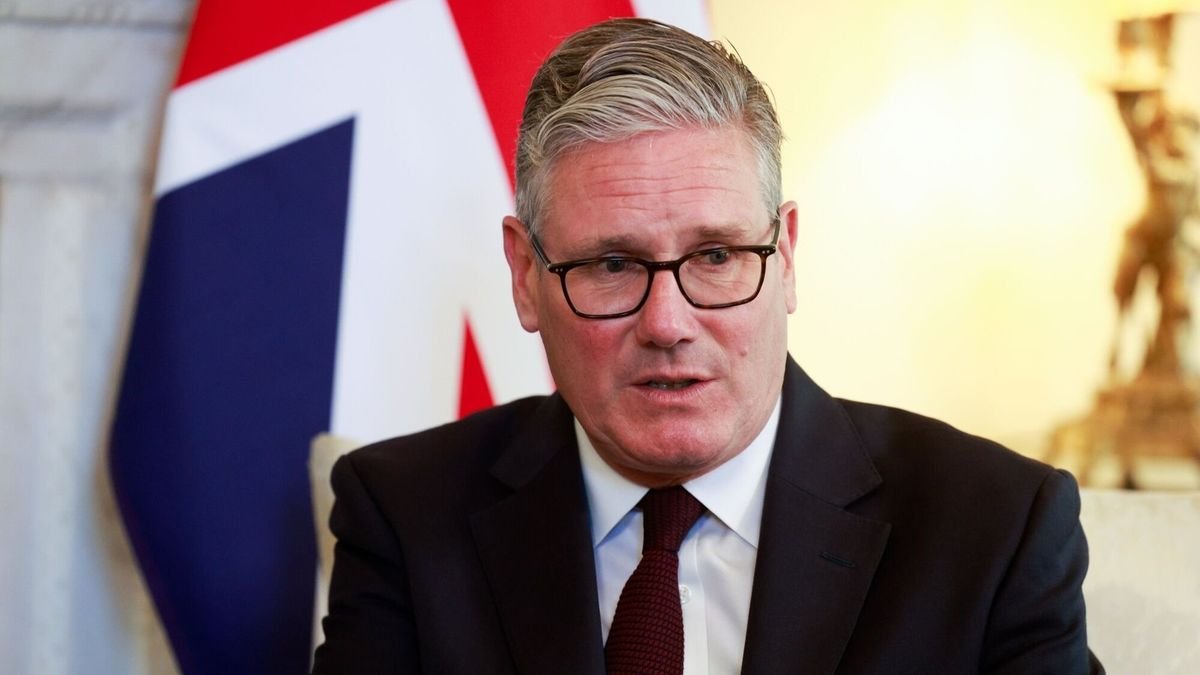
In his upcoming session of Prime Minister’s Questions (PMQs), the Prime Minister will engage with MPs following the introduction of the contentious Defence Investment Plan. Meanwhile, potential future Prime Minister Andy Burnham outlined his strategy to mend a “broken” system.
Recently, Keir Starmer revealed a commitment of £15 billion in spending over the forthcoming four years for the Defence Investment Plan. However, concerns have arisen regarding a funding gap of £4.7 billion that remains unaccounted for. Chancellor Rachel Reeves informed Parliament that only £10.3 billion of the total sum has been secured, with the remaining £4.7 billion to be addressed in a forthcoming budget.
Despite speculation surrounding a substantial funding gap, Defence Secretary Dan Jarvis dismissed the notion that this shortfall would pose a significant challenge for the incoming Makerfield MP, Andy Burnham. Following Starmer’s announcement of stepping down, Burnham delivered a pivotal address outlining his vision for the nation, promising a robust initiative to boost council house construction on a scale not seen since the aftermath of World War II.
Burnham also pledged a significant decentralization of power, emphasizing the need to empower mayors and local leaders, asserting that centralized growth directives are ineffective. With no contenders emerging to challenge Burnham in the impending leadership race, he stands poised to assume the role of Prime Minister by mid-July.
Looking ahead to the political landscape, it is anticipated that Keir Starmer may face scrutiny over the £4.7 billion shortfall in the Defence Investment Plan during the upcoming PMQs. The revelation of this funding gap has drawn parallels to previous criticisms leveled by Starmer and Rachel Reeves regarding financial discrepancies post the 2024 general election.
Addressing the funding gap concerns, it was indicated that Andy Burnham was not informed of the £4.7 billion deficit until the plan was made public. Minister Luke Pollard defended this gap, highlighting the standard practice of allocating funds in stages and reassured that the necessary financial measures would be implemented to bridge the shortfall.
Furthermore, it was revealed that a substantial portion of the identified funding would be sourced from reductions in capital budgets of various government departments. While the specifics of funding allocation are yet to be finalized, the government aims to address the gap through a combination of strategies, including reallocating existing budgets and engaging in asset sales.
In light of these developments, the political landscape is poised for further debate and deliberation as the government navigates the challenges posed by the Defence Investment Plan and the funding gap it entails.

