

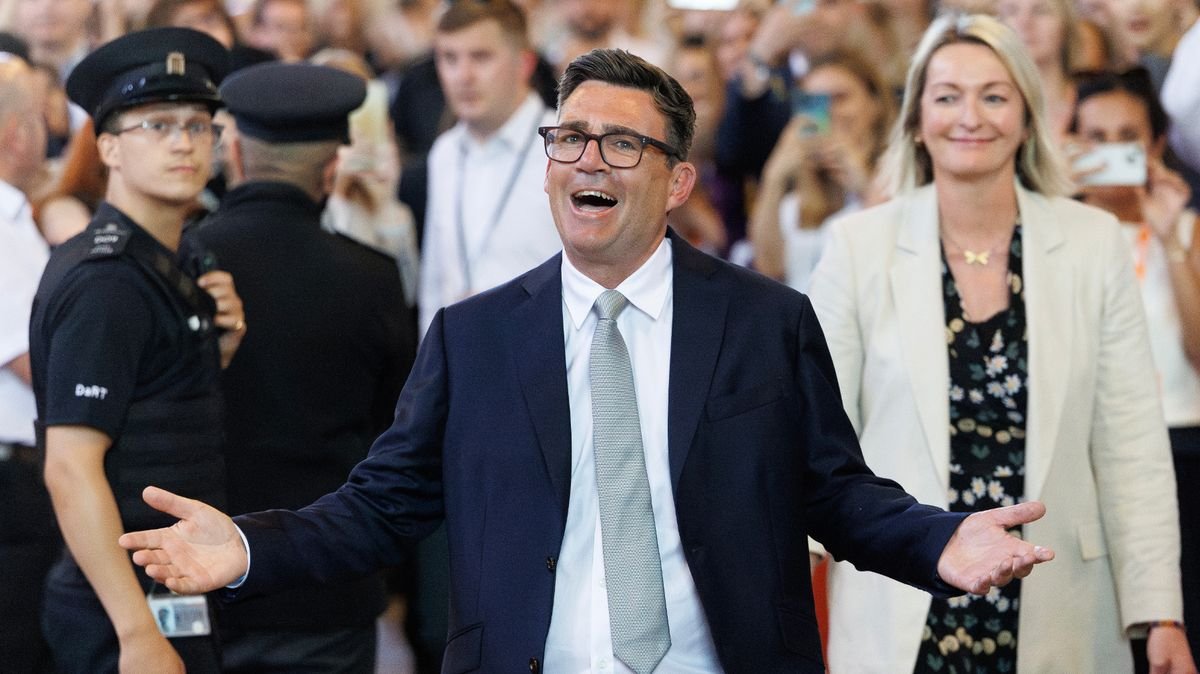
Amid the scorching summer reminiscent of the 1970s, discussions are buzzing about a potential return to that era in British politics. Voices of concern are rising as Andy Burnham’s political ascent stirs fears of a regression to the tumultuous times of the Satanic Seventies, marked by economic struggles and social unrest.
Critics, including figures like Wetherspoons’ Tim Martin and Sir Rocco Forte, warn of a bleak future under Burnham’s leadership, citing parallels to the challenges faced during the Labour government of the 1970s. The debate intensifies as former Prime Minister Tony Blair joins the fray, cautioning against a shift back to what he perceives as the failures of that era.
Despite the apprehension, Burnham’s strategic appointments and cautious stance on disruptive changes suggest a pragmatic approach rather than a radical overhaul of the current system. The focus seems to be on addressing contemporary issues while drawing inspiration from the past to create a more inclusive and equitable society.
The nostalgia for the 1970s, often associated with a sense of community, equality, and social cohesion, contrasts sharply with the prevailing individualism and inequality of recent decades. The prospect of reviving certain aspects of that era, such as bolstering public services, enhancing workers’ rights, and fostering regional development, resonates with those seeking a fairer and more balanced society.
As the debate unfolds, the underlying tension between visions of the past and aspirations for the future remains palpable. Burnham’s potential to bridge this gap and offer a new direction for the country hinges on his ability to address the concerns of ordinary citizens and counter the allure of populist narratives promising an idealized past that never truly existed.

