

Observing the scene on Lake Street in Minneapolis, I witnessed the country in turmoil.
Amidst burning police cars, hovering helicopters, and devastated city blocks, bystanders congregated near vandalized shops and charred buildings, all pondering the rapid disintegration unfolding before them.
Reflecting on the response to the tragic death of Henry Nowak several years later, concerns arise that the unsettling patterns witnessed in America may be taking root in the UK.
Having experienced the repercussions of such political turmoil during my time in America, it is evident where such divisive politics can lead when genuine public grievances are manipulated by fear and sorrow. Alarming parallels are now emerging in the UK, echoing tactics reminiscent of those employed by Donald Trump.
The heart of the chaos in Minneapolis revolved around the tragic killing of George Floyd, a Black man pinned down by a white police officer’s knee as he pleaded for breath, mirroring Henry’s final moments.
The resulting fury and grief that swept across America were undeniably authentic. Decades of strained relations between Black communities and law enforcement culminated in a catastrophic eruption of pent-up frustration and anger.
However, what transpired went beyond mere protest; it evolved into something more sinister. The tragedy attracted politicians, opportunists, and extremists who exploited the situation for personal gain. Peaceful demonstrations advocating for justice were infiltrated by radicals devoid of genuine concern for George Floyd.
Extremists from the far right, political opportunists, and online provocateurs reveled in the chaos, as they thrive on sowing division and inciting rage. Their actions in America fueled a destructive cycle that the far right in the UK now seeks to emulate.
Britain had a foreboding glimpse of this path following the brutal murders of three young girls in Southport in 2024. The ensuing violence that erupted across various British cities, characterized by mob rampages, assaults on law enforcement, targeting of asylum seeker accommodations, and rapid spread of misinformation online, underscored the dangerous consequences of politicizing tragedy and grief.
Nigel Farage’s exploitation of Henry’s murder for his political agenda, transforming it into a spectacle of cultural conflict, is a disheartening choice. In the wake of Henry’s killer receiving a minimum 21-year prison sentence, Farage’s inflammatory rhetoric incited volatile reactions in Southampton, where the tragedy unfolded.
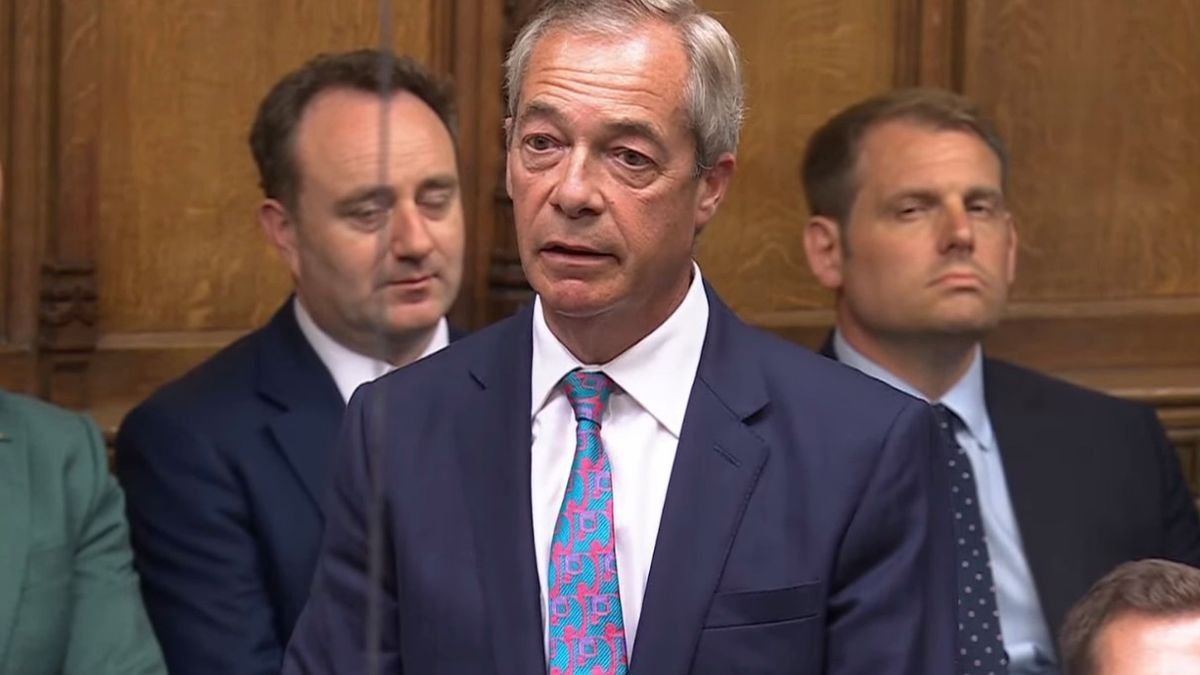
Addressing the issue at Prime Minister’s Questions, Farage propagated divisive narratives, insinuating a biased approach to policing and inflaming tensions without condemning the violence that ensued in Southampton.
Farage’s actions, cloaked in superficial concern, exacerbated existing animosities, directly contradicting the wishes of Henry’s grieving family who pleaded for unity, not division, in the aftermath of their son’s death.
Sir Keir Starmer’s direct confrontation of Farage’s exploitation was warranted. Emphasizing that Henry was not a symbol for racial controversy but a human being, Starmer rebuked the politicization of tragedy for personal gain.
Henry’s death should not be reduced to a tool for political narratives. Farage’s relentless pursuit of grievances for political expediency undermines the gravity of the tragedy and detracts from the pursuit of genuine public service over theatrical outrage.
The core lesson from this tragic episode is straightforward: a violent individual’s actions led to a young man’s untimely death, compounded by police mismanagement and failure to respond effectively to the unfolding crisis.
The focus should be on accountability and rectifying systemic failures, not on fueling divisive rhetoric or exploiting personal tragedy for political ends. Learning from the mistakes of the past, Britain must navigate these turbulent times with wisdom and unity, honoring Henry’s memory with respect and dignity.

